
Ever found yourself pondering the mysteries of UFOs?
When it comes to investigating UFO landing traces, I’ve learned there are key signs to look for.
Start by examining the ground for any impressions or indentations. They can tell you a lot about weight and shape.
Keep an eye out for signs of soil alteration too—think burn patches.
Don’t forget about the vegetation; scorched leaves and bent branches can be telling details.
Using tools like a magnetometer for magnetic anomalies or a Geiger counter for radiation levels can really enhance your findings.
And if you spot any metallic residues, collect them for closer examination!
So, what unexplained signs will you uncover?
My Adventure at the Mysterious Field
One evening, driven by curiosity, I ventured into a secluded field rumored to be a UFO hotspot. As I scanned the area, I stumbled upon a perfect circular indentation in the soil, surrounded by charred grass. My heart raced!
I quickly took out my magnetometer, and lo and behold—a strong magnetic anomaly popped up!
It reminded me of the time I learned about magnetic fields in school, and it felt surreal to see it in action.
This experience ignited my passion for UFO investigations and connected me to other enthusiasts—imagine the discussions over alien technology and unexplained phenomena!
Engaging with like-minded people made every discovery even more exciting.
Quick Takeaways
- Examine ground impressions and indentations for distinct patterns, shapes, and weights indicative of a possible craft.
- Analyze soil characteristics for signs of burning, dehydration, or reversed layers that suggest unusual disturbances.
- Inspect foliage for burned leaves, abnormal growth, and any bending or breaking of branches that may indicate landing effects.
- Use a magnetometer to detect magnetic anomalies and cross-reference with eyewitness reports to validate findings.
- Measure radiation levels with a Geiger counter and collect metallic residues for analysis to strengthen evidence credibility.
Recognizing Ground Impressions and Indentations

Recognizing ground impressions and indentations is essential when investigating potential UFO landing sites. You’ll want to focus on distinguishing unique patterns in the soil, as they can reveal much about what transpired during a reported sighting.
Use identification techniques, such as measuring dimensions and analyzing the shape of the impressions, to gather impactful evidence.
Don’t overlook witness testimonies, as they can provide insights and corroborate your findings. Observers often describe how the ground appeared or any unusual features they noticed.
Being aware of physical changes in vegetation or soil is critical. From unusual depressions to altered soil color, these clues can piece together the overall picture of what might’ve landed there, supporting your quest for understanding the unexplained. Moreover, the presence of ground indentations can suggest the weight and type of craft that may have been involved during a sighting.
Analyzing Burned and Desiccated Soil Patches
When investigating potential UFO landing sites, analyzing burned and desiccated soil patches is essential, as these indicators can reveal significant details about what may have occurred. You should look for unusual soil characteristics that suggest an intense energy impact. These patterns may provide clues about the landing itself.
| Soil Characteristic | Potential Analysis Outcome |
|---|---|
| Blackened soil | Possible burning from energy |
| Cracked or dry areas | Signs of rapid dehydration |
| Reversed soil layers | Uncommon disturbances |
| Changes in mineral composition | Indication of alien materials |
Performing an energy impact analysis on these patches helps you distinguish natural occurrences from potential UFO activity. Additionally, be aware that certain sites may exhibit radiation residue, which can further support your findings. Recall, our commitment at ParaPhenomenal is to uncover these mysteries and share observations with fellow truth-seekers.
Inspecting Damage to Foliage and Vegetation
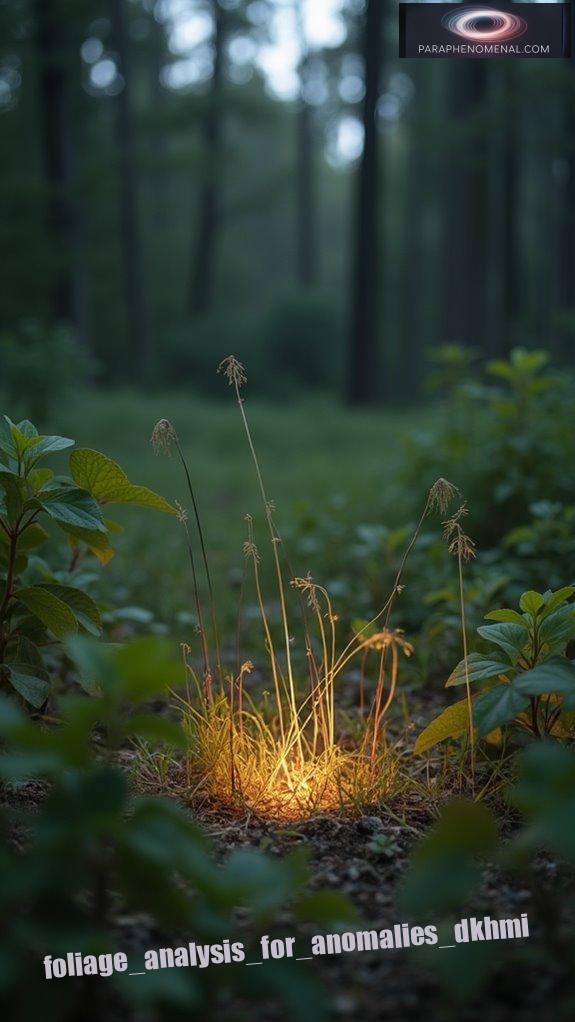
Inspecting damage to foliage and vegetation is a critical aspect of investigating potential UFO landing sites. You should focus on identifying unique patterns and anomalies in the plants, as these could indicate unusual phenomena.
- Look for burned or scorched areas on leaves and blades of grass.
- Note any unusual bending or breaking of branches and stems.
- Conduct a foliage analysis to evaluate any unusual discoloration or growth patterns.
Understanding these vegetation impacts can provide information into the events that occurred, as UFO landing burn marks often leave behind physical evidence. By thoroughly examining the foliage, you guarantee a more thorough investigation.
Our website, ParaPhenomenal, aims to support those interested in exploring these intriguing phenomena as you uncover the mysteries of potential extraterrestrial interactions.
Detecting Magnetic Anomalies at Landing Sites
Detecting magnetic anomalies at landing sites serves as an important part of investigating potential UFO encounters.
When you arrive at a suspected landing area, use a magnetometer to identify unusual patterns in the Earth’s magnetic field. These anomalies could indicate something has disturbed the environment.
Be cautious of electromagnetic interference, which can distort readings and lead to misinterpretation. By cross-referencing the data with eyewitness accounts and other evidence, you can better understand the significance of any detected anomalies. Furthermore, aircraft electromagnetic interference can complicate the assessment of these readings, highlighting the need for careful analysis.
Such findings mightn’t only reveal the presence of a craft but also help in understanding its characteristics.
ParaPhenomenal exists to support curiosity-driven investigations like yours, promoting freedom to explore and learn about extraordinary events connected to UFO phenomena.
Measuring Increased Radiation Levels

To properly assess potential UFO landing sites, measuring increased radiation levels is crucial, as significant anomalies could signal unusual activity.
You should be aware of some important factors when measuring radiation levels:
- Understand and apply radiation detection techniques to guarantee accurate readings.
- Always follow established safety protocols to protect yourself from potential harm.
- Use equipment that’s calibrated and maintained for the most reliable results.
When investigating, a Geiger counter can help detect unusual radiation levels in the area, raising potential questions about what occurred there. Government studies on UFO radiation effects provide a context for understanding these anomalies.
It’s essential to take note of any spikes in radiation, as they might suggest an extraterrestrial presence, enhancing our understanding of UFO phenomena.
This meticulous attention to detail is why we created ParaPhenomenal, aiming to shed light on these mysteries.
Collecting Metallic Residues and Traces
In the domain of UFO investigations, collecting metallic residues and traces plays an essential role in understanding potential extraterrestrial activity.
Start by using metal detection tools to identify any unusual metallic fragments near landing sites. These residues could provide vital evidence of a UFO encounter.
Once you gather the samples, conduct thorough residue analysis to determine their composition. This analysis can reveal whether the metals are terrestrial or have characteristics linked to advanced technologies.
By combining these findings with other physical evidence, you enhance the investigation’s credibility.
At ParaPhenomenal, we explore such phenomena to empower enthusiasts like you to seek answers.
Keep in mind, every metallic clue might edge you closer to uncovering the truths hidden in the unexplained.
Exploring Crop Circles: Evidence or Hoax?

What makes crop circles so fascinating—are they evidence of extraterrestrial activity or merely clever hoaxes? You might find yourself intrigued by the ongoing debates surrounding crop circle theories.
- Some crop circles exhibit unusual patterns and shapes that seem too complex for human design.
- Reports of energy impacts suggest possible connections to alien technology.
- Many formations remain unexplained, inviting further investigation.
While skeptics often attribute these phenomena to human pranksters, others argue for their potential as indicators of UFO landings.
As you explore this web of intrigue, keep in mind that platforms like ParaPhenomenal aim to explore deeper into strange occurrences, providing revelations to help you navigate this perplexing topic.
Stay curious—whether it’s evidence or a hoax, it’s worth examining!
FAQ
How Can I Report a Suspected UFO Landing Site?
If you suspect a UFO landing site, report it immediately. Gather your eyewitness accounts, document everything, and submit your findings to local authorities or UFO research groups. Don’t let fear silence your truth—freedom of expression matters!
What Tools Are Useful for Amateur Investigations?
For amateur investigations, utilize essential equipment like cameras, soil testing kits, and magnetometers. Combine these with investigation techniques such as documenting witness accounts, analyzing environmental anomalies, and conducting thorough physical inspections to uncover potential UFO landing evidence.
Are There Any Safety Concerns When Investigating UFO Sites?
When you investigate UFO sites, keep in mind safety protocols and field precautions are essential. Avoid hazardous terrain, watch for radiation, and consider wildlife. Your quest for the unknown should never come at the cost of your freedom or safety.
How Can I Differentiate Between Natural and Man-Made Anomalies?
To differentiate between natural and man-made anomalies, you’ll evaluate anomaly characteristics through evidence classification. Look for unique patterns in soil or foliage, and consider environmental factors like radiation or magnetic changes to guide your assessment.
Where Can I Find Scientific Studies on UFO Trace Evidence?
You can find scientific studies on UFO trace evidence in reputable scientific journals. Libraries, online databases, and platforms like Google Scholar will help you access a range of research articles discussing various fascinating findings.
References
- https://en.wikipedia.org/wiki/Unidentified_flying_object
- https://www.cia.gov/stories/story/how-to-investigate-a-flying-saucer/
- https://en.wikipedia.org/wiki/Identification_studies_of_UFOs
- https://www.cia.gov/readingroom/document/cia-rdp81r00560r000100010002-9
- https://blog.atriresearch.org/articles/ufos-and-hard-evidence-2
- https://apps.dtic.mil/sti/tr/pdf/AD0680975.pdf
- https://www.neuroscigroup.us/articles/APT-5-137.php
- https://digitalcommons.usf.edu/cgi/viewcontent.cgi?article=2339&context=jss