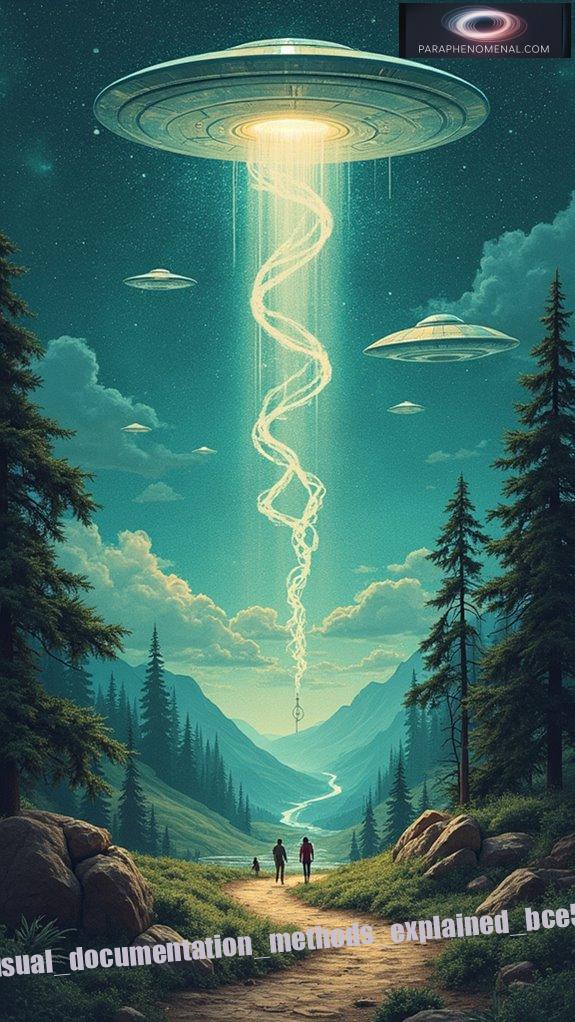
Ever wondered how to truly document UFO encounters?
Let me share some effective methods I’ve discovered.
First up is photography—capturing those fleeting moments before they vanish. Then there’s video recording, great for preserving motion and the eerie atmosphere.
Audio recordings can add that chilling environmental background, while eyewitness sketches offer a creative glimpse into what people experienced.
Consider crowdsourced media maps for a collective understanding, and always rely on scientific instruments for objective data. Lastly, controlled experiments can shed light on these mysterious phenomena.
With these techniques, I’ve found clarity in the chaos of the unexplained.
My Eye-Opening Close Encounter
It was a quiet evening when I spotted a bright object in the sky, dancing erratically. I instinctively grabbed my camera and began snapping photos.
My heart raced as I switched to video for a more dynamic record. That night, I learned the importance of combining various documentation methods to capture the full experience.
The UFO, a bright orb, left me mesmerized. I later mapped out sightings around my area, connecting with others who had similar experiences.
Exploring these phenomena can lead to fascinating discoveries—are you ready to dive in?
Quick Takeaways
- Photography: Captures still images of close encounters, providing visual evidence and historical documentation for analysis of extraordinary occurrences.
- Video Recording: Offers dynamic footage that enhances authenticity, captures motion analysis, and shows immediate surroundings for real-time context during events.
- Audio Recording: Incorporates sound to enrich documentation, captures witness reactions, and adds ambient details that visuals alone may overlook during encounters.
- Eyewitness Sketches: Combines artistic interpretation with observational detail, providing unique insights into encounters when photographic evidence is scarce or unavailable.
- Scientific Instrumentation: Utilizes objective tools like radar and sensors to gather precise data, supporting or refuting eyewitness accounts during investigations into unexplained phenomena.
Photography: Capturing the Moment
Photography serves as an essential tool in capturing visual evidence during close encounters, especially when other methods may fall short.
By meticulously capturing clarity, you document moments that can reveal the extraordinary. Photographs hold historical significance, offering a glimpse into past events, sometimes leading to transformative investigations.
Meticulous photographic documentation reveals extraordinary moments, providing historical insights that can spark transformative investigations.
For instance, iconic images from historical sightings allow you to analyze patterns and understand behaviors associated with these phenomena. Additionally, the analysis of UFO photo evidence can provide critical insights that challenge or corroborate eyewitness accounts.
At ParaPhenomenal, we aim to empower you with knowledge and resources to explore these intriguing encounters, helping you uncover the truth behind the unknown while preserving evidence for future examination.
Video Recording: The Power of Motion
Video recording has emerged as a powerful means of documenting close encounters, revealing dynamic evidence that still images cannot capture. With motion analysis, you get to observe details in ways static photos fall short, enhancing video authenticity. This medium offers a chance to analyze interactions and environmental surroundings, crucial for understanding phenomena. Recent investigations have demonstrated that government UFO video investigations validate the importance of video documentation in identifying unexplained aerial phenomena.
| Feature | Benefit | Example |
|---|---|---|
| Motion Analysis | Captures detailed movement | Al Taqaddum Object |
| Real-time Surroundings | Shows immediate reactions | Everyday smartphone use |
| Authenticity | Validates experiences | Official investigations |
Audio Recording: Enhancing Visual Evidence
While visual documentation plays an essential role in capturing close encounters, incorporating audio recording can greatly enhance the overall quality of evidence.
Audio nuances and ambient sounds add depth to your findings, revealing witness reactions and eerie noises that visuals alone can’t convey. Whether it’s the rustle of leaves or distant chatter, these sounds provide background that enriches the documentation.
Using audio alongside visuals paves the way for a more detailed understanding, allowing you to interpret experiences more fully.
We created ParaPhenomenal to encourage more thorough investigations, reminding you that every sensory detail matters in this intriguing quest for truth.
Eyewitness Sketches: Artistry Meets Observation
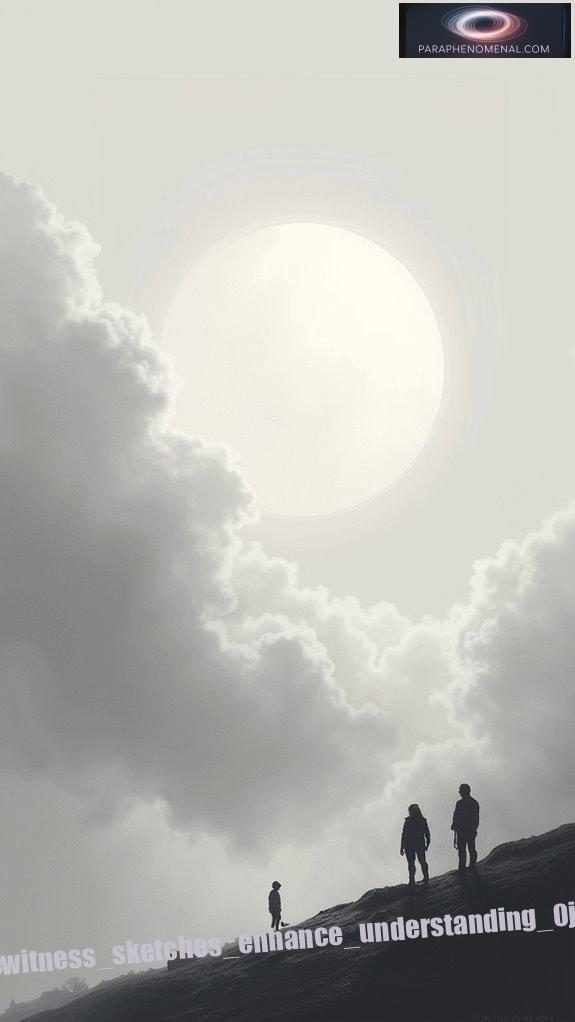
Eyewitness sketches provide a unique blend of artistry and observation, capturing details that might not be preserved through photographs or videos. These sketches reflect both sketch accuracy and the artist’s unique interpretation, offering understandings into encounters that remain elusive.
| Feature | Eyewitness Sketches | Photography |
|---|---|---|
| Detail Level | High | Variable |
| Interpretative Depth | Artistic interpretation | High |
| Availability | When photos unavailable | Always accessible |
When you think about how these sketches breathe life into experiences, it’s clear they hold a special place in documenting close encounters. They can reveal viewpoints that facts alone sometimes can’t capture, as we discovered at ParaPhenomenal.
Crowdsourced Media Maps: A Collective Perspective
Crowdsourced media maps, which pull together user-submitted videos and photos, offer a fascinating glimpse into close encounters as experienced by individuals around the world.
These platforms enhance crowdsourced accuracy by compiling diverse viewpoints, fostering a sense of collective exploration. User engagement thrives as people contribute their own sightings, forming a dynamic database of visual experiences.
YouMap and similar services highlight global encounters, often revealing unexpected patterns and geographical hotspots.
Scientific Instrumentation: Objectivity in Investigation
Scientific instrumentation plays an essential role in investigating close encounters, as it provides objective data that can either support or refute eyewitness accounts.
Using tools like radar, infrared sensors, and spectrometers fosters data accuracy and adheres to measurement standards. These devices help eliminate bias, ensuring a more factual representation of events.
For example, scientific readings can capture details often missed by the human eye.
At ParaPhenomenal, we recognize the importance of objective evidence, advocating for meticulous analysis to help you explore the unknown with confidence.
Embracing scientific instrumentation enhances our collective understanding of mysterious phenomena.
Controlled Experiments: Testing the Unknown
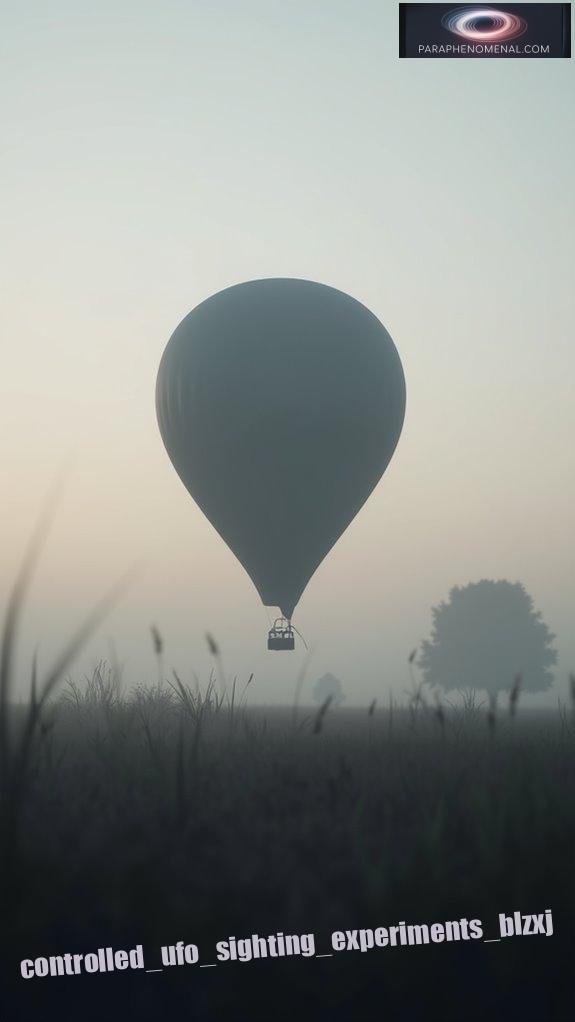
When trying to understand mysterious phenomena like UFO sightings, controlled experiments can help you test hypotheses in a systematic way. By establishing controlled variables, you can recreate specific conditions similar to reported sightings.
Using replication methods, you’ll observe how different factors affect outcomes, providing understanding into the phenomena. For example, photograph balloons under the same weather conditions as noted in a sighting to analyze similarities.
These experiments uncover patterns and inform your understanding, enhancing public discourse about UFO encounters. This is precisely why we created ParaPhenomenal—to explore these unknowns through structured, scientific investigation.
Photographic and Video Recording Documentation Types
As you explore the fascinating world of close encounters, understanding the types of photographic and video recording documentation is crucial. These visual methods offer unique perspectives and can support claims of surreal experiences.
| Documentation Type | Description |
|---|---|
| Photography | Employs various photographic techniques for still images. |
| Video Recording | Dynamic capture through video analysis, showing movements and setting. |
| Eyewitness Sketches | Artistic representations when photos are unavailable. |
| Crowdsourced Media | Compilation of user-submitted visuals via platforms like YouMap. |
Utilizing these methods effectively can enhance your exploration, providing you with crucial evidence as you document the extraordinary. This knowledge inspired the creation of ParaPhenomenal.
FAQ
How Can I Verify the Authenticity of UFO Photos?
To verify UFO photos, conduct extensive photo analysis focusing on metadata and image quality. Consider witness reliability, as honest recounting enhances credibility. Cross-reference with other evidence and credible sources for a thorough understanding.
What Are the Legal Implications of Recording Encounters?
Recording encounters is like painting the night sky; you must respect privacy rights and gain consent. Without these, your canvas could face legal storms, clouding the freedom to explore the extraordinary. Be thoughtful in your documentation.
Can Social Media Influence Witness Testimonies?
Yes, social media can greatly influence witness testimonies. As you share experiences online, peer feedback may shape your perceptions, impacting witness credibility. It’s essential to approach shared information critically to maintain authenticity in accounts.
How Do Weather Conditions Affect Visual Documentation?
Weather conditions can play tricks on your visual documentation. With thick cloud cover, you’ll struggle to capture clear images. Poor light conditions may hide wonders, diminishing your chances of making intriguing discoveries you seek.
What Ethical Considerations Should Be Taken During Investigations?
When conducting investigations, guarantee you obtain informed consent from all participants and respect their cultural backgrounds. Being sensitive to diverse viewpoints fosters trust, integrity, and freedom, allowing for more authentic and respectful encounters in your research.
Summary
In a world where aliens might just be watching you eat cereal, it’s essential to document those peculiar encounters with precision and flair. Whether you’re snapping photos or drawing sketches, bear in mind: evidence is everything. Our understanding of the unknown expands through these methods, piecing together a bizarre puzzle of potential realities. At ParaPhenomenal, we believe that to understand the strange, you’ve got to capture it all. So, keep your camera handy—you never know when the next close encounter will happen.
References
- https://phamvanvung.github.io/publications/UFO_Tracker.pdf
- https://gisgeography.com/ufo-sighting-maps/
- https://www.youtube.com/watch?v=2Lb-STlkIkI
- https://www.cia.gov/stories/story/how-to-investigate-a-flying-saucer/
- https://www.aaro.mil/UAP-Cases/Official-UAP-Imagery/
- https://science.howstuffworks.com/space/aliens-ufos/the-10-most-legitimate-cases-of-u-f-o-sightings.htm
- https://smart.dhgate.com/how-to-report-a-ufo-a-step-by-step-guide-to-sharing-your-sighting-with-authorities/