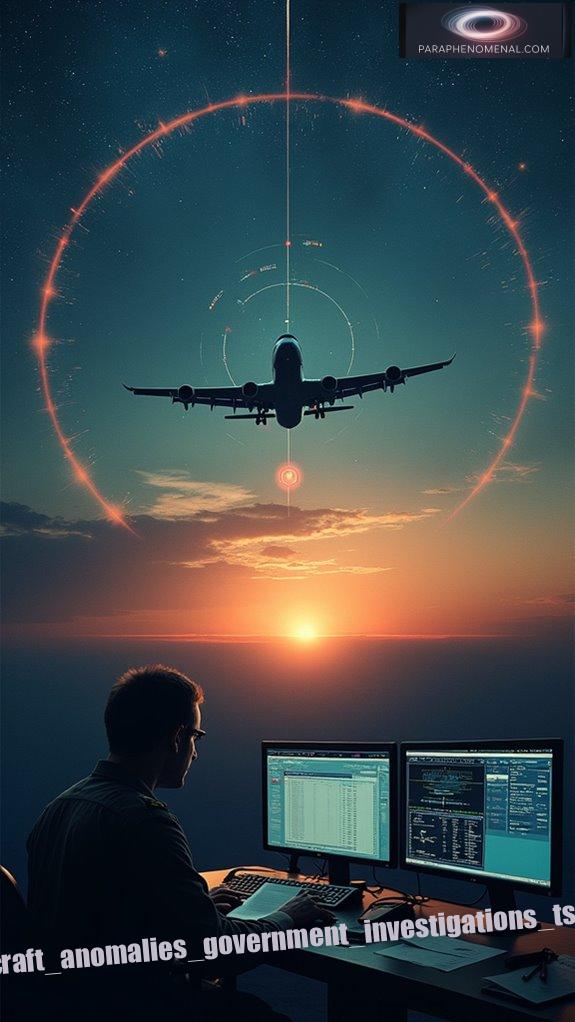
Why are we so fascinated by UFOs?
Unidentified aerial phenomena (UAP) grab our attention because they challenge our understanding of reality.
I investigate these aircraft anomalies to ensure aviation safety and national security.
These mysterious sightings, often dismissed, can impact flight operations in ways we can’t even imagine.
From historical incidents to modern-day encounters, delving into this world helps us uncover potential threats.
At ParaPhenomenal, I’m excited to unravel these enigmas, and together, we can explore their importance deeper.
—
A Close Encounter: My Personal UFO Experience
I vividly remember a warm summer evening when I noticed strange lights moving erratically in the night sky. This mesmerizing sight sparked my interest in UAPs.
As I stood there, unable to look away, I felt a mixture of awe and trepidation. Was it a drone, a military craft, or something entirely otherworldly?
The experience created a deep desire to understand not only what I witnessed but the broader implications of UFO activity on our safety and security.
Looking back, it ignited my journey into the investigation of these phenomena—an exploration entangled with national defense, aerospace technology, and the unknown.
Quick Takeaways
- Governments investigate aircraft anomalies to ensure aviation safety and address disruptions that can affect flight operations.
- National security concerns motivate investigations into unidentified aerial phenomena (UAP) that may pose threats near military assets.
- Understanding electromagnetic interference (EMI) is essential to prevent operational issues in navigation and communication systems of aircraft.
- Historical cases of unexplained aircraft anomalies inform current safety protocols and highlight potential risks for pilots.
- Investigative efforts by organizations like the AARO promote data collection and analysis, reducing stigma around UAP sightings.
The Importance of Aviation Safety in Anomaly Investigations
When it comes to aviation safety, every anomaly can spark concern, especially if it might threaten flight operations.
Aviation regulations are designed to guarantee that all air travel is secure, so when unexpected incidents occur, they’re taken seriously.
Investigating these anomalies, like unidentified aerial phenomena or electromagnetic interference, plays a critical role in maintaining flight safety.
Each event can disrupt navigation systems or communications, impacting pilots’ control.
That’s why governments prioritize understanding these occurrences—so the risks don’t go unaddressed.
As you’ve seen through our inquiries, organizations like the All-domain Anomaly Resolution Office work tirelessly to unravel these mysteries, keeping the skies as safe as possible for everyone.
The existence of aircraft electromagnetic interference underscores the necessity of these investigations.
Your awareness and understanding of these investigations can empower your freedom, guaranteeing a safer journey.
National Security Concerns Surrounding UAP
As governments around the world explore deeper into the investigation of unidentified aerial phenomena (UAP), national security concerns rise sharply.
Understanding potential threats is essential for military preparedness.
UAP often appear near sensitive military assets, raising alarms for threat assessment.
It’s vital to discern whether these anomalies pose risks to national safety or if they’re merely sightings without malicious intent. Recent government reports highlight that these sightings are taken seriously, as they could indicate potential threats to national defense strategies.
Understanding Electromagnetic Interference and Its Effects
Electromagnetic interference (EMI) affects various systems, particularly in aviation, where it can cause significant operational issues.
You need to understand that EMI can stem from various electromagnetic sources, including onboard systems or ground-based transmitters.
These disruptions can result in sensor anomalies, leading to issues with navigation and communication systems. When aircraft sensors encounter interference, they may provide erroneous readings, potentially compromising safety.
Recognizing the impact of EMI is critical for the aviation community.
At ParaPhenomenal, we aim to shed light on such phenomena to promote transparency and raise awareness.
Historical Cases of Aircraft Anomalies and Their Impact
Many historical cases of aircraft anomalies raise important questions about aviation safety and the operational risks pilots face.
From unexplained maneuvers in the sky to perplexing electrical failures, historical encounters have left traces of uncertainty in our aviation history. Incidents, like those reported by NICAP, demonstrate that aircraft occasionally experience erratic behavior during close encounters, leading to investigations that shine a light on potential dangers.
The U.S. Air Force’s examination of over 1,500 UFO cases in 1952 reveals a consistent pattern of unexplained phenomena.
At ParaPhenomenal, we explore these mysteries to bring clarity to an often misunderstood subject. Understanding these historical anomalies isn’t just thrilling; it’s essential for enhancing the safety and security of our skies.
Modern Investigation Efforts: The Role of AARO
The All-domain Anomaly Resolution Office, or AARO, plays a vital role in today’s investigations of aircraft anomalies. Through various AARO initiatives, the office examines Unidentified Aerial Phenomena (UAP) reports, focusing on potential risks to flight safety and national security.
AARO collaborates with other agencies, such as the FAA, to improve data collection and analysis, ensuring a united front against unidentified threats. These collaborations enhance understanding and reporting, helping to reduce stigma around UAP sightings.
As you seek transparency and freedom in understanding these phenomena, consider how such institutional efforts contribute to our collective knowledge.
Engaging with these findings can empower you to ask questions and to be part of the discourse surrounding these intriguing anomalies.
Increasing Reporting and Stigma Reduction Among Pilots
Pilots are increasingly stepping forward to report anomalies they encounter in the skies, marking a significant shift in how these strange occurrences are perceived.
With dedicated reporting platforms, you now have a safe space to share your pilot experiences without fear of judgment. The once-stigmatized notion of reporting these events is changing, as more pilots are realizing the importance of documenting unusual sightings.
This newfound openness contributes to a richer understanding of aerial phenomena, enabling aviation authorities to address potential safety threats.
As platforms continue to promote transparency, your voice helps diminish past fears surrounding stigma. Engaging in these discussions not only legitimizes your experiences but also fosters a community willing to explore the unknown.
After all, freedom in reporting is essential for safety in the skies.
The Call for Transparency and Scientific Review in Investigations
Growing openness among pilots about reporting aerial anomalies signals a broader shift towards greater accountability and transparency in investigations. This change points toward a demand for strong transparency measures and scientific rigor in how governments approach these incidents.
You might visualize this shift as:
- Clear reporting channels for pilots to document experiences.
- Thorough examinations of data to identify legitimate threats.
- Informed public discussions that elevate awareness and understanding.
Each of these elements fosters trust, allowing the freedom to explore ideas without fear of ridicule.
Society deserves to know what’s happening in our skies, and a call for transparency can empower greater engagement. That’s why platforms like ParaPhenomenal aim to shine a light on these vital discussions.
FAQ
What Types of Anomalies Are Classified as UAPS by Governments?
Like shadows dancing in the night, UAP classifications include unidentified aerial phenomena and those exhibiting extraordinary flight characteristics. Governments often keep details under wraps, fueling curiosity about what’s truly out there, hidden in secrecy.
How Do Researchers Analyze Reports of Aircraft Anomalies?
Researchers use anomaly classification and report evaluation to assess data, identifying patterns and inconsistencies. By analyzing eyewitness accounts and sensor data, they aim to uncover truths behind reported incidents while prioritizing transparency and safety for all.
What Technology Is Used to Detect Electromagnetic Interference in Aviation?
You won’t believe the tech revolution! Electromagnetic scanners and aviation sensors detect interference like superheroes, battling rogue signals and preserving our flight freedom. These tools guarantee your sky adventures stay safe and exhilarating. Buckle up!
Are Civilian Aircraft Ever Impacted by Military UAP Incidents?
Yes, civilian aircraft can be impacted by military UAP incidents. Military protocols prioritize civilian safety, ensuring that any potential threats from unidentified aerial phenomena are assessed to mitigate risks to commercial flights and passenger safety.
How Do Public Perceptions Influence Government Investigations of Anomalies?
Public perception acts as a powerful lighthouse, guiding government investigations of anomalies. When trust wanes, influenced by sensational media, transparency becomes essential. Your awareness shapes responses, ensuring freedom to question and demand clarity in mysterious encounters.
References
- https://www.cia.gov/readingroom/document/cia-rdp81r00560r000100010001-0
- https://www.jbsa.mil/News/News/Article/3966080/dod-examining-unidentified-anomalous-phenomena/
- https://ntrs.nasa.gov/api/citations/19960009442/downloads/19960009442.pdf
- https://www.dni.gov/files/ODNI/documents/assessments/Prelimary-Assessment-UAP-20210625.pdf
- https://dsiac.dtic.mil/articles/caes-mad-xr-next-gen-magnetic-anomaly-detection-system-enters-production/
- https://www.usgs.gov/news/state-news-release/media-alert-low-level-flights-image-geology-over-parts-arkansas-illinois
- https://www.congress.gov/118/meeting/house/117721/documents/HHRG-118-GO12-20241113-SD003.pdf
- https://verticalmag.com/press-releases/sikorsky-and-cae-bring-digital-magnetic-anomaly-detection-capability-to-mh-60r-maritime-helicopters/
- https://www.aaro.mil