Tag: 3I/ATLAS

  • Can 3I/ATLAS Hit Earth?

    Can 3I/ATLAS Hit Earth?

    Have you ever wondered about the thrilling cosmic events that unfold in our universe?

    Let’s talk about 3I/ATLAS.

    I was fascinated to learn that during its closest approach on December 19, 2025, it’ll be a whopping 1.8 astronomical units away—around 270 million kilometers! That’s far beyond typical near-Earth objects.

    Currently, the impact risk of this comet is considered zero, which is a relief. It follows a hyperbolic path, meaning it won’t be swinging back around to visit us again.

    Understanding 3I/ATLAS feels crucial for our exploration of interstellar objects. Just imagine the stories it could tell if it could!

    My Encounter with the Unexplained: Chasing UFOs

    In my younger years, I was captivated by the idea of UFOs. One starry night, out camping with friends, I spotted a peculiar light darting across the sky. It was unlike anything I’d seen!

    Could it have been a secret military craft or something from another world? We pulled out our phones to capture the moment, but it vanished in an instant.

    This experience sparked my curiosity for interstellar research and UFO activity. My deep dive into the exploration of celestial objects—like 3I/ATLAS—has unveiled wonders, and I suspect we’re just scratching the surface of what’s out there. Could we be on the brink of encountering something extraordinary?

    Quick Takeaways

    • 3I/ATLAS follows a hyperbolic trajectory, indicating it will not return to the solar system after its current pass.
    • The closest approach to Earth will be on December 19, 2025, at a distance of approximately 1.8 AU.
    • This distance of 1.8 AU translates to about 270 million kilometers, ensuring no collision threat.
    • Current assessments confirm the impact probability of 3I/ATLAS is effectively zero.
    • Comprehensive tracking and monitoring show no future collision possibilities with Earth.

    Nature of 3I/ATLAS
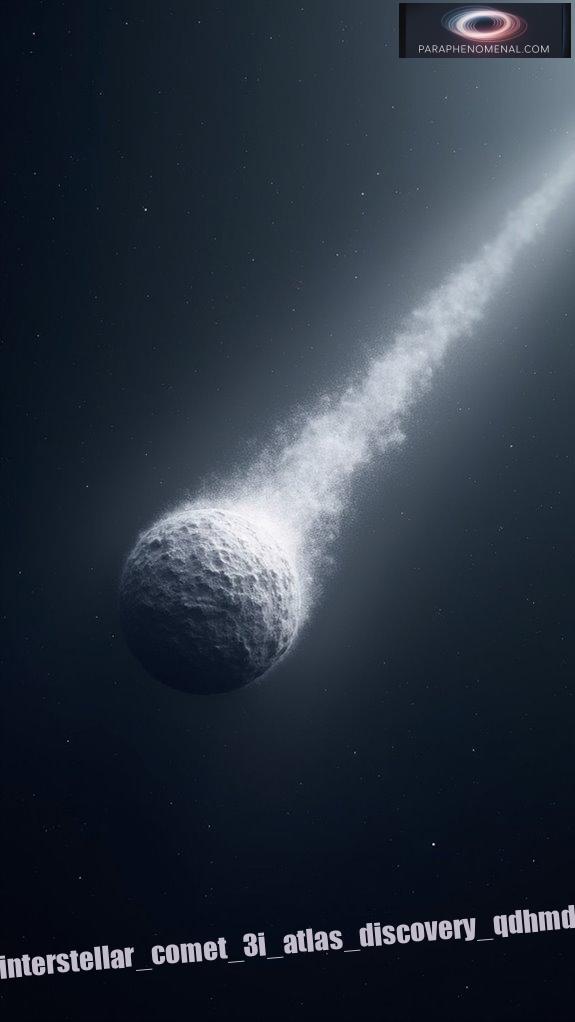
    interstellar comet 3i atlas discovery

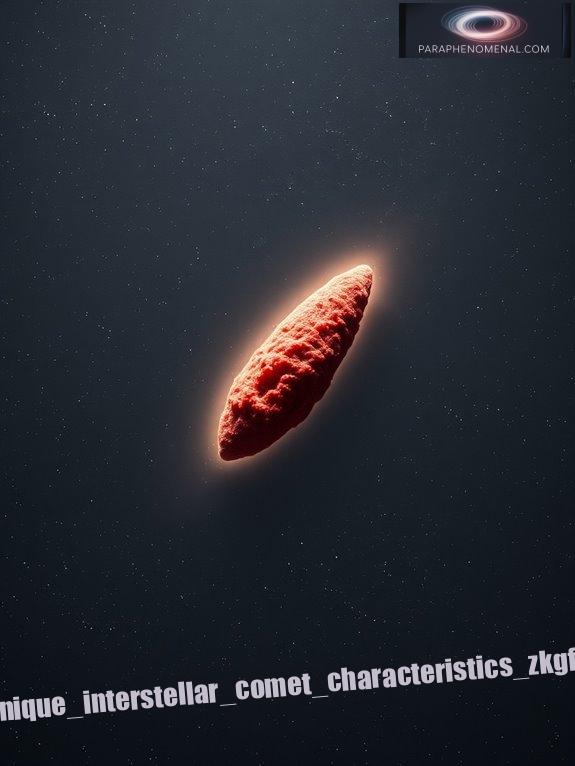
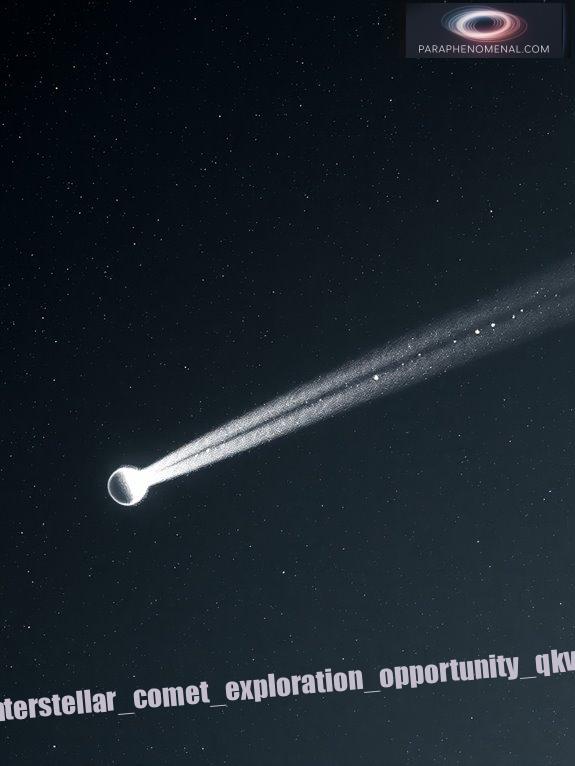
    The interstellar comet 3I/ATLAS is a fascinating object that offers understanding into our universe. This comet, with its interstellar origin, moves at incredible speeds and carries a unique icy nucleus, distinguishing it from asteroids. Its nucleus can reach up to 3.5 miles in diameter. As it approaches the Sun, you’ll see it accelerate further. 3I/ATLAS isn’t just a random celestial body; it holds clues about the materials floating between stars. Notably, its expected closest point to the Sun is projected to occur around October 30, 2025, providing a prime opportunity for observation and study. Furthermore, its hyperbolic trajectory suggests that it has come from beyond our solar system, making it an extraordinary opportunity to study interstellar comets in greater detail.

    Scientists, including those at ParaPhenomenal, aim to uncover its secrets to shed light on our cosmos. By studying this comet, you can grasp the magnificence of interstellar objects and their role in the grand tapestry of space.

    Orbital Path of 3I/ATLAS

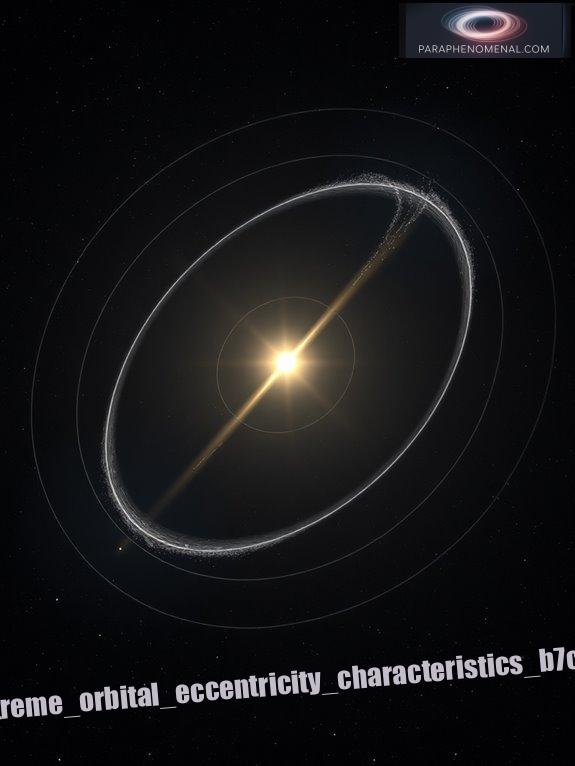
    Orbiting through the solar system, 3I/ATLAS follows a unique hyperbolic path that sets it apart from other celestial bodies. This comet originates from beyond our solar system, and its orbital characteristics indicate it won’t return after this visit.

    Traveling at an astonishing 130,000 miles per hour, it approaches Mars in early October 2025, passing 17 million miles away. Its closest encounter with the Sun occurs around October 30, 2025, when it reaches 1.4 astronomical units. Additionally, it will reach a maximum altitude of 28.7 degrees in the sky as observed from Earth on October 10, 2025. Observers will notice how interstellar objects can display trajectories that defy our expectations during this rare event.

    Approaching Mars in October 2025, 3I/ATLAS travels at 130,000 miles per hour, nearing the Sun shortly after.

    As 3I/ATLAS speeds past Jupiter in March 2026, its hyperbolic trajectory highlights the dynamics of interstellar objects interacting with our solar system.

    For enthusiasts, such as those at ParaPhenomenal, observing this comet reveals the wonders of the cosmos.

    Distance From Earth at Closest Approach

    At closest approach on December 19, 2025, you’ll find that 3I/ATLAS will be approximately 1.8 astronomical units (AU) from Earth, which translates to about 270 million kilometers or 170 million miles.

    This distance comparison highlights that 3I/ATLAS is well beyond the typical range of near-Earth objects. In fact, it’s about 1.5 times farther than the distance from Earth to the Sun, ensuring no threat of collision. Additionally, the comet’s hyperbolic trajectory ensures that it moves too fast to be bound by the Sun’s gravity, further indicating the absence of any impact risk. As it travels through space, the comet will continue on a future trajectory that carries it out of our solar system.

    While some other planets experience closer encounters, like Mars at approximately 28 million kilometers, Earth enjoys a substantial separation from this comet.

    With 3I/ATLAS’s swift transit through the inner Solar System, it ultimately reaffirms our mission at ParaPhenomenal to keep you informed about cosmic events like this.

    Impact Risk Assessment
    comet 3i atlas poses no risk

    As scientists analyze the trajectory of 3I/ATLAS, they can confidently conclude that the comet poses no risk of impacting Earth.

    With its closest approach more than 1.8 AU away, the impact probability is effectively zero.

    The comet’s retrograde and inclined orbit keeps it safely distant from Earth, ensuring a clear path.

    Risk evaluation shows current data confirms no future collision possibility, further validating our comprehension.

    While potential impact effects are significant for similar-sized bodies, 3I/ATLAS isn’t a threat.

    In fact, the unusual scientific implications of its hyperbolic interstellar trajectory highlight the fascinating dynamics of comets in our solar system.

    Here at ParaPhenomenal, we aim to provide clear perspectives into celestial events, emphasizing the importance of understanding and monitoring such phenomena.

    Tracking and Monitoring by Space Agencies

    Tracking and monitoring by global space agencies is essential for understanding the behavior of comets like 3I/ATLAS. These agencies utilize advanced tracking systems and various observation techniques to keep an eye on the comet.

    The ATLAS network, with telescopes in Hawaii, Chile, and South Africa, first detected 3I/ATLAS, and NASA’s Swift telescope further monitored its unusual activity in ultraviolet light. Ground-based optical telescopes and space-based platforms work together to refine trajectory predictions.

    Spectroscopic techniques reveal unique gas emissions, while machine learning systems enable real-time tracking of any unexpected changes. By integrating data from multiple sources, we enhance our understanding of 3I/ATLAS and reduce potential risks, which is why we at ParaPhenomenal emphasize the importance of staying informed about these events. NASA is currently evaluating multiple trajectory options for comet missions to optimize observations and ensure safety.

    Scientific Significance of 3I/ATLAS

    The scientific significance of 3I/ATLAS extends beyond its status as an interstellar object; it serves as a window into the composition and dynamics of celestial bodies from other star systems.

    The interstellar 3I/ATLAS offers insights into the materials and dynamics of celestial bodies from distant star systems.

    By examining this comet, you’ll gain understandings into materials from distant environments, enhancing our understanding of astrophysical processes. It presents a unique opportunity for scientific collaboration among researchers globally, merging astronomical studies with public interest.

    As the third known interstellar visitor, 3I/ATLAS allows you to compare its features with Solar System comets, potentially revealing organic compounds that could enlighten theories on prebiotic chemistry.

    With its high velocity and distinct trajectory, this object offers a rare chance to advance knowledge in interstellar research, making it a topic that engages both scientists and enthusiasts alike.

    FAQ

    How Was 3i/Atlas Discovered?

    3I/ATLAS was discovered on July 1, 2025, by the ATLAS survey telescope in Chile.

    Using advanced discovery methods, it monitored the night sky, identifying objects at risk. Initially faint with a magnitude around 18, its observations suggested a hyperbolic trajectory, hinting at its interstellar origin.

    This discovery holds astronomical significance, making 3I/ATLAS the third interstellar object found, sparking immense scientific interest in its unique features and behavior.

    What Tools Were Used to Track 3i/Atlas?

    To track 3I/ATLAS, astronomers utilized various tracking methods and observation techniques. Ground-based optical telescopes like ATLAS and SALT monitored its brightness and composition, while space telescopes, including the Hubble, provided detailed dust plume observations.

    The JPL Horizons system helped predict its orbital path, aiding accurate trajectory calculations. These combined efforts guarantee a thorough understanding of the comet’s behavior, ultimately fostering our curiosity and interest in celestial phenomena at ParaPhenomenal.

    What Is the Age of 3i/Atlas?

    The age of 3I/ATLAS is estimated to be between 3 and 11 billion years, with some studies suggesting around 7.5 billion years.

    This age offers intriguing perspectives into its orbital history and compositional analysis. If it originated during the galaxy’s formation, it could reveal key details about early chemical and physical conditions in the Milky Way.

    Exploring this ancient traveler fuels our desire for knowledge, a core reason behind creating ParaPhenomenal.

    Does 3i/Atlas Have Any Moons?

    No, 3I/ATLAS doesn’t have any moons. High-resolution observations show no signs of moon formation or secondary objects affecting its trajectory.

    The absence of detected moons simplifies celestial dynamics, focusing attention on its nucleus and dust production instead. Previous interstellar objects also lacked moons, suggesting that ejected comets typically lose close companions.

    Our curiosity drives us to explore these cosmic anomalies, and we aim to share these discoveries on ParaPhenomenal.

    Can We See 3i/Atlas From Earth?

    Yes, you can see 3I/ATLAS from Earth under the right visibility conditions.

    With its predicted brightness during closest approach, you might catch a glimpse without special equipment. However, using advanced observation techniques like telescopes will enhance your viewing experience.

    The comet’s unique speed and composition make it a fascinating subject for study.

    We created this website, ParaPhenomenal, to share such intriguing cosmic events with you, enriching your understanding of the universe.

    References

  • Formation Theories Behind 3I/ATLAS Interstellar Origin

    Formation Theories Behind 3I/ATLAS Interstellar Origin

    Ever wonder about the origins of mysterious objects wandering our solar system?

    3I/ATLAS is no exception.

    I feel captivated by its story.

    Ejected from a distant star system, it was flung into the vastness of interstellar space due to gravitational chaos among nearby stars.

    Imagine the tumult of supernovae and instability creating this cosmic wanderer!

    With ancient materials, 3I/ATLAS might just be a window into early planetary formation.

    What secrets does it hold about our universe?

    The journey of 3I/ATLAS sparks my curiosity—what else have we yet to discover?

    UFO Sightings and Cosmic Curiosities: A Personal Anecdote

    I’ll never forget the night I witnessed a UFO hovering over my hometown.

    While stargazing, I felt a strange pull—something beyond the allure of constellations.

    Could it have been a visitor from a distant star system, like 3I/ATLAS?

    My heart raced as I observed its erratic movements, reminiscent of gravitational forces at play in space.

    This experience opened my eyes to the possibility that the universe is filled with secrets just waiting to be unraveled.

    Topics like extraterrestrial life, cosmic phenomena, and gravitational anomalies have since fascinated me, connecting the dots between UFO sightings and celestial bodies.

    Quick Takeaways

    • Gravitational dynamics during early star system formation lead to ejection of smaller bodies into interstellar space.
    • Nearby stars create gravitational interactions, often resulting in planetary instability and ejection events.
    • Massive stellar events, like supernovae, contribute significantly to the formation and ejection of interstellar objects.
    • 3I/ATLAS likely formed in the thick disk of the Milky Way, characterized by older, metal-poor stars.
    • Understanding these ejection mechanisms enhances knowledge about the origins of interstellar objects such as 3I/ATLAS.

    Interstellar Origin and Journey of 3I/ATLAS

    interstellar object discovery insights

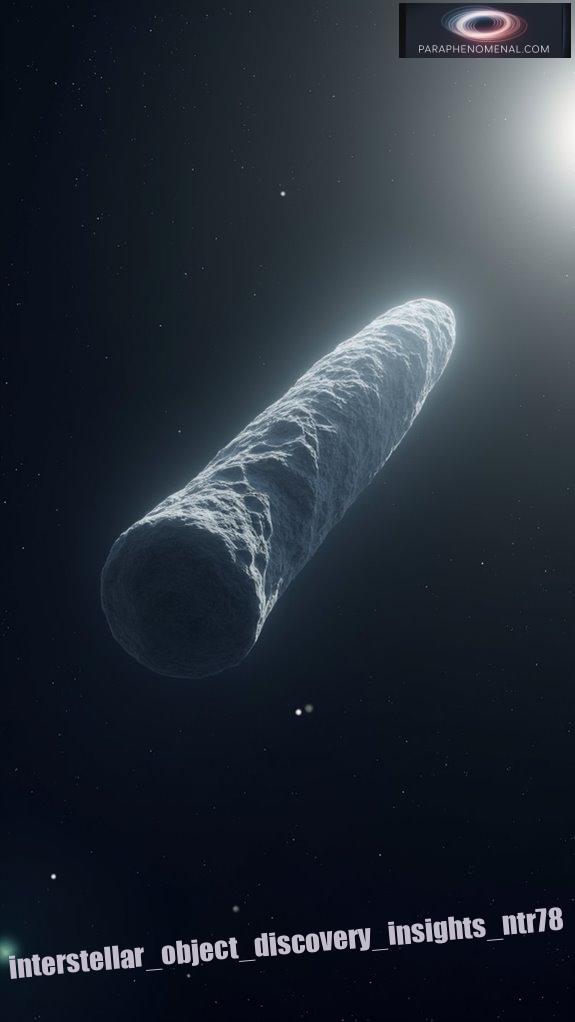
    While exploring the vast reaches of space, scientists discovered 3I/ATLAS on July 1, 2025, making it only the third known interstellar object to enter our Solar System.

    This fascinating object likely originated from a distant star system, born from the processes of stellar migration. Its hyperbolic trajectory, traveling at 61 km/s, signals a long journey through cosmic filaments and dense star fields near the Galactic Center, where many stellar migration processes shape the formation of such bodies.

    Despite the challenges in early detection, data gathered reveals that 3I/ATLAS carries pristine materials, unaltered by Solar System influences. The maximum orbital speed of this unique comet reaches up to 68.3 km/s at its closest approach to the Sun, a testament to its interstellar journey.

    Data indicates that 3I/ATLAS holds untouched materials, offering a glimpse into the cosmos before Solar System influence.

    As researchers study this ancient messenger, they’re revealing more about the universe we navigate. Continued observations will enhance our understanding of interstellar objects and the vast dimensions we seek to explore at ParaPhenomenal.

    Age and Galactic Context of 3I/ATLAS

    3I/ATLAS not only captivates scientists with its origin story but also poses intriguing questions about its age and the broader galactic framework.

    Preliminary age estimation suggests it could be around 311 billion years old, making it the oldest detected interstellar object. Even a conservative estimate of about 7 billion years still highlights its significant age compared to our solar system’s 4.5 billion years. This remarkable age aligns with the characteristics of interstellar visitors that originate from older parts of the Milky Way.

    Its possible origins come from the thick disk of the Milky Way, a place filled with older, metal-poor stars. This connection to galactic history enriches our understanding of how early planetary systems formed in a vastly different chemical environment, as the age of 3I/ATLAS indicates a history that could greatly inform our knowledge of stellar evolution. As we explore its age, we learn more about our galaxy and its evolution.

    Physical Characteristics of 3I/ATLAS

    Many fascinating aspects define the physical characteristics of 3I/ATLAS, making this interstellar object an intriguing subject for astronomers.

    The nucleus size is estimated to range from 1,000 feet to 3.5 miles across, though it’s not directly visible due to the surrounding coma. Observations confirm this icy nucleus is active, typical of comet classification, and recent studies have provided insights into its composition of the nucleus, further emphasizing its unique characteristics.

    The coma activity suggests a significant dust production rate, with an estimated mass-loss between 0.1 and 1.0 kg/s. Dust particles vary in size and are ejected at speeds reaching 1 m/s. As you investigate deeper into studying 3I/ATLAS, you’ll find that ongoing research aims to refine our understanding of its nucleus and coma activity, revealing more about its enigmatic nature. Additionally, the comet is classified as a comet due to its icy nucleus and active coma, linking it with traditional cometary behavior.

    Theories of Ejection From Host Star Systems

    gravitational chaos causing ejections

    The ejection of objects like 3I/ATLAS from their host star systems is a fascinating process influenced by various gravitational and dynamic interactions.

    Gravitational influence from nearby stars plays a critical role, particularly during early star system formation when planets are still settling. As these systems evolve, planetary instability often leads to the chaos necessary for ejections.

    Gravitational forces from nearby stars significantly influence early star system formation, creating chaos that leads to planetary ejections.

    Gravitational interactions among planets can fling smaller bodies, like comets, into the vastness of interstellar space. Moreover, massive stellar events, such as supernovae or close encounters with other stars, can also cause objects to be expelled.

    Understanding these mechanisms helps you grasp the origins of unusual interstellar objects, like 3I/ATLAS, and appreciating our quest for knowledge through ParaPhenomenal enriches this experience.

    Role in Planetary Formation Theories

    Understanding the role of objects like 3I/ATLAS in planetary formation theories reveals how essential these icy bodies are in developing our knowledge of the universe.

    These elements provide valuable perspectives, including:

    • Formation implications regarding the origins of icy bodies beyond the CO₂ frost line.
    • Compositional analysis helping us understand chemical gradients within protoplanetary disks.
    • Evidence of volatile compounds indicating cold formation environments far from their host stars.
    • Links to the potential formation zones of outer planetesimals, offering clues about extrasolar systems.

    Studying these factors not only aids in refining the models of material distribution but also enhances our grasp of how planetary systems evolve.

    Current Observations and Future Research on 3I/ATLAS

    As 3I/ATLAS continues its journey through the solar system, various observational campaigns are in full swing, revealing intriguing reflections into its nature.

    Recent discoveries, like hydrogen cyanide emissions detected by the James Clerk Maxwell Telescope, suggest complex chemical processes at play.

    Recent findings of hydrogen cyanide emissions indicate intriguing complexity in 3I/ATLAS’s chemical processes.

    Ground-based telescopes from Hawaii, Chile, and Australia, along with space-based instruments like Hubble and James Webb, employ advanced observational techniques to gather valuable data.

    ESA’s Mars Express and Juice missions also provide unique understandings during 3I/ATLAS’s perihelion. Observations from space telescopes highlight the comet’s remarkable features and offer insights into its interstellar characteristics.

    Future research aims to analyze elemental composition and potential origins through ongoing observations, permitting comparisons between interstellar and solar-system bodies.

    This collaboration fosters the understanding that drives our curiosity, allowing us to explore the cosmos freely, and is part of what fuels ParaPhenomenal’s creation.

    FAQ

    How Can We Differentiate Between Cometary and Asteroidal Objects?

    To differentiate between cometary and asteroidal objects, you’ll want to examine their nucleus composition and surface characteristics.

    Comets generally contain more ice and volatile materials, while asteroids are more solid and mineral-rich.

    Comets display comas and tails, indicating their volatile contents, whereas asteroids lack these features.

    What Instruments Are Used to Observe 3i/Atlas?

    To observe 3I/ATLAS, scientists use various instruments, including optical telescopes for capturing visible light and infrared spectroscopy to analyze its thermal emissions.

    These tools help determine the object’s composition and behavior, revealing its cometary nature. Ground-based and space-based observatories contribute to tracking its movement and monitoring changes, making the observations essential.

    At ParaPhenomenal, we endeavor to deliver detailed understanding about celestial events like this, ensuring you stay informed about the universe’s wonders.

    Are There Any Known Interactions With Other Celestial Bodies?

    3I/ATLAS hasn’t had significant celestial interactions with other bodies.

    Computer simulations reveal it traveled largely untouched by gravitational influences from neighboring stars, retaining its ancient nature.

    Approaching the Sun from 1.4 AU, it poses no threat to Earth.

    As you ponder its journey, the vastness of interstellar space ignites wonder; this comet, despite its high speed and grand history, remains a solitary traveler through the cosmos, far from the entanglements of our solar system.

    How Might 3i/Atlas Affect Earth’s Environment During Close Approaches?

    3I/ATLAS won’t considerably affect Earth’s environment during close approaches.

    With gravity influences so far away, there aren’t any expected environmental shifts. At its closest, 3I/ATLAS maintains a distance that prevents any debris from reaching us.

    The comet’s high-speed passage keeps its materials localized, ensuring Earth remains unaffected.

    While we monitor its activity for scientific purposes, any possible impacts are negligible, keeping our planet safe and allowing us to satisfy curiosity about the cosmos.

    Could Future Missions Directly Sample 3i/Atlas or Similar Objects?

    Sampling 3I/ATLAS or similar objects is like trying to catch lightning in a bottle; it’s fast, unpredictable, and demanding.

    Future mission designs could enable sample collection, but advanced technology is essential. Quick-response probes with innovative propulsion will minimize travel time.

    You’ll need precise navigation to adapt to their orbits, ensuring instruments withstand harsh environments.

    With collaborative efforts, you could finally access vital understandings about these mysterious visitors from beyond our solar system.

    References

  • What Causes Water Loss in 3i/Atlas?

    What Causes Water Loss in 3i/Atlas?

    3I/ATLAS continues to baffle me with its intriguing water loss mysteries.

    Did you know it loses water primarily due to carbon dioxide sublimation?

    Unlike typical comets, this process kicks off even when it’s not close to the Sun.

    Its surface—unique and highly rich in CO2—accelerates the sublimation, releasing water ice trapped beneath.

    With a larger active area than your average comet, the rate of water loss is astonishing!

    What cosmic secrets might we uncover from this behavior?

    It’s all part of a much larger puzzle in our universe.

    A Close Encounter with the Unexplained

    During my years of UFO investigation, I’ve encountered phenomena that defy logic.

    One memorable night, while observing the clear sky, I witnessed a strange object zigzagging faster than any aircraft.

    Could it be related to the mysterious behavior of celestial bodies like 3I/ATLAS?

    I immediately thought of the water loss linked to sublimation and the potential for life that could thrive in bizarre cosmic environments.

    The more we explore, the more questions arise, don’t they?

    What else is out there, waiting to be discovered?

    Astrobiology, space exploration, and, of course, CO2 sublimation—these are just the tip of the iceberg in deciphering our universe’s riddles.

    Quick Takeaways

    • Water loss in 3I/ATLAS begins far from the Sun, driven by sublimation before typical heating occurs.
    • The high abundance of carbon dioxide (CO2) accelerates sublimation, releasing trapped water ice.
    • A significant active surface area of about 8% efficiently releases water vapor.
    • Ice-coated dust grains enhance sublimation dynamics and contribute to the high water loss rate.
    • Distinct composition and trajectory, including a unique nickel to iron ratio, influence the comet’s outgassing behavior.

    Water Loss Rate in 3I/ATLAS

    unusual water loss rate

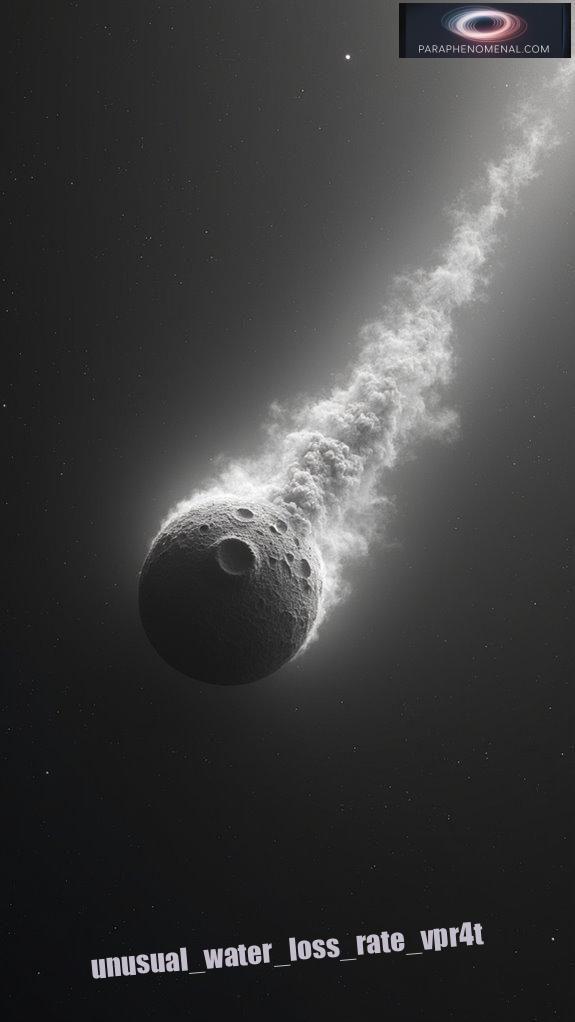
    As you explore the unusual characteristics of comet 3I/ATLAS, you’ll find that its water loss rate is a significant point of interest. This comet sheds about 40 kilograms (88 pounds) of water every second, comparable to a firehose at full blast.

    Over 18 hours, that rate equates to the volume of an Olympic-size swimming pool.

    Notably, this water loss occurs when the comet is 2.9 to 3.3 AU from the Sun, a distance where most comets are inactive. The detected ultraviolet hydroxyl emissions hint at unique sublimation processes occurring, influenced by the comet’s distinct cometary composition. Such high activity indicates that 3I/ATLAS may differ fundamentally from other comets, confirming the diverse nature of celestial bodies we often capture on ParaPhenomenal. This level of water loss rate is particularly unusual for interstellar comets, setting 3I/ATLAS apart from its Solar System counterparts. Furthermore, the high ratio of carbon dioxide in the coma suggests that 3I/ATLAS could be undergoing different chemical processes, which might further explain its remarkable sublimation dynamics.

    Causes of Water Loss

    Understanding the causes of water loss in comet 3I/ATLAS provides understandings into its unique behavior in the cosmos.

    Water loss starts far from the Sun, with sublimation processes kicking in even before typical heating occurs. The high abundance of carbon dioxide (CO2) plays an essential role, as CO2 sublimates more readily than water, releasing trapped water ice beneath the surface. Additionally, this comet exhibits a remarkable water loss rate of 88 pounds per second due to its unique composition and trajectory. Cometary gas sublimation processes significantly influence these dynamics, as the interplay between different volatiles affects the overall outgassing rate.

    Icy debris in the coma also contributes to this outgassing, acting as mini-sources of water vapor. As these fragments warm under solar radiation, they generate water vapor without requiring high surface activity.

    If you’re curious about cosmic phenomena, our website ParaPhenomenal can offer knowledge into these unique processes and the fascinating science behind them.

    Active Surface Area and Its Role

    The active surface area of comet 3I/ATLAS plays a crucial role in its water loss and unusual activity.

    • About 8% of its surface releases water vapor.
    • The high water loss rate of 40 kg/s illustrates considerable outgassing.
    • This active surface outstrips that of typical comets, even far from the Sun.
    • Ice-coated dust grains amplify sublimation dynamics, creating unexpected activity. Moreover, the comet’s unusual nickel to iron ratio contributes to its distinct characteristics, impacting its composition and behavior. Notably, fragmentation events can further influence water loss and activity levels.

    These factors contribute to a unique scenario, where 3I/ATLAS defies conventional comet behavior.

    Understanding how the active surface area interacts with sublimation dynamics provides understanding into its fascinating trajectory.

    As we explore these cosmic wonders through ParaPhenomenal, we reveal the complex stories behind celestial phenomena, enhancing our appreciation for the freedom found in the vastness of space.

    Detection Methods for Water Loss

    advanced comet water detection

    Detecting water loss in comet 3I/ATLAS involves several advanced methods that facilitate the observation of its unique activity. These detection techniques include ultraviolet imaging and spectral analysis, employing space-based telescopes to overcome observational challenges caused by Earth’s atmosphere. Notably, NASA’s missions aim to understand NASA’s missions around comet 3I/ATLAS to provide deeper insights into its behavior.

    Detection Technique Purpose Key Instruments
    Ultraviolet Imaging Detects hydroxyl gas Neil Gehrels Swift Observatory
    Spectral Analysis Analyzes composition Gemini South Telescope
    Multi-Mission Observations Combines data from various sources Hubble, James Webb, Swift

    Future Observations and Implications

    How might future observations of comet 3I/ATLAS change our understanding of interstellar objects? As we explore deeper into its unique characteristics, the findings could reshape our perception of cosmic bodies and their histories:

    • Discovering alien chemical signatures might reveal origins distinct from our Solar System.
    • Uncovering icy debris helps us understand active sublimation outside typical ranges.
    • Monitoring its water loss could indicate ancient cosmic collisions and transformations.
    • Observing interactions within the coma sheds light on volatile distribution and mass loss.

    Future observations may also provide insights into unusual comet trajectories, which could lead to a better understanding of how such objects navigate through space.

    Future observations can bridge gaps in understanding the cosmic environment, illuminating both the past and future of interstellar objects.

    This knowledge enriches our comprehension of the universe, allowing us to explore what lies beyond our home—a key aim of the ParaPhenomenal website.

    FAQ

    How Does Temperature Affect Water Loss From Comets Like 3i/Atlas?

    Temperature greatly influences water loss from comets like 3I/ATLAS. As temperatures rise, sublimation increases, driven by the comet’s composition. This behavior resembles how wax melts when heated; smaller icy grains warm faster, releasing water vapor even in colder environments.

    While you might think sunlight’s warmth is the only factor, the mix of gases, particularly carbon dioxide, can trigger activity at lower temperatures, impacting water loss rates and showing how complex these celestial bodies really are.

    What Are the Implications of Water Loss for Future Research on Comets?

    Water loss from comets like 3I/ATLAS has significant implications for future research on comet composition.

    The unique ratios of water and carbon dioxide challenge our understanding of these bodies and their origins.

    As scientists study these emissions, they can better evaluate the distribution of volatiles in the universe, which could inform models of organic molecule delivery and even the potential for life beyond Earth.

    Your interest in these findings enriches our exploration of cosmic mysteries.

    How Does 3i/Atlas Compare to Other Comets Regarding Water Loss?

    3I/ATLAS loses water at a rate much higher than typical comets, with about 40 kilograms per second compared to the usual 3% to 5% surface activity.

    Its unique water composition and enhanced cometary behavior, such as releasing water vapor from icy grains in the coma, set it apart.

    Understanding this helps analyze how different origins and ages affect comets, which is part of why we created the ParaPhenomenal website to explore such phenomena.

    What Is the Long-Term Fate of Comets Losing Water Rapidly?

    Rapid water loss in comets like 3I/Atlas has important long-term implications for comet dynamics.

    As they lose volatiles, their mass decreases, affecting their orbits and rotation. Eventually, these comets may become dormant or fragmented, resembling asteroids rather than lively, active bodies.

    Without replenishment, they fade from visibility, leaving behind trails of debris.

    Understanding this process allows us to appreciate the broader mechanics of celestial bodies, a focus we embrace at ParaPhenomenal.

    Can the Water Loss Rate Change Over Time for 3i/Atlas?

    Yes, the water loss rate for 3I/ATLAS can change over time.

    It might fluctuate based on various water loss variables like the comet’s distance from the Sun and structural changes in its icy debris cloud.

    Historical observations show that as the comet ages, its volatile reservoirs may diminish, leading to episodic bursts of activity.

    This complex behavior reveals the comet’s unique characteristics, setting it apart from others in our Solar System.

    References

  • 3i/Atlas Velocity Vs Typical Solar System Comets

    3i/Atlas Velocity Vs Typical Solar System Comets

    Have you ever encountered something so fast, it leaves you questioning reality?

    3I/ATLAS zooms through our Solar System at breakneck speeds.

    Initially, it races in at around 58 km/s, only to pick up speed to 68 km/s near the Sun.

    For context, most comets drift around at mere tens of kilometers per second.

    It’s a stunning reminder that this object is an interstellar visitor, sparking curiosity about its origins and journey.

    What if it slipped past our world unnoticed, leaving us pondering what else might be out there?

    My Close Encounter with UFO Activity: A Fast-Paced Mystery

    A few years back, I was stargazing in a remote area famed for UFO sightings. I spotted a strange light streaking across the night sky, moving significantly faster than any aircraft I had ever seen.

    It bore eerie similarities to how 3I/ATLAS darts through space. I couldn’t help but wonder if it was another interstellar traveler or perhaps something more elusive.

    Other experts often discuss unexplained aerial phenomena (UAP), but my personal experience solidified my fascination with the idea that we are not alone. The thrill of that night, coupled with the mysteries of cosmic speed, fuels my passion for uncovering truths about the universe.

    Quick Takeaways

    • 3I/ATLAS travels at a velocity of approximately 58 km/s upon entering the Solar System, significantly faster than typical solar system comets.
    • Solar system comets generally move at lower speeds, with long-period comets exceeding 50 km/s, and short-period comets at tens of kilometers per second.
    • At peak perihelion, 3I/ATLAS reaches speeds up to 137,000 mph (approximately 68 km/s), showcasing a much higher velocity than solar system counterparts.
    • Typical solar system comets are bound by the Sun’s gravity, while 3I/ATLAS follows a hyperbolic trajectory indicating it is not gravitationally bound.
    • The high velocity of 3I/ATLAS reflects a unique journey from another star system, contrasting with the elliptical orbits of solar system comets.

    3I/ATLAS: The Fastest Solar System Visitor

    fastest interstellar solar system visitor

    When you think about visitors from space, it’s easy to picture something slow and gentle, but I/ATLAS shatters that image as the fastest object recorded coming through our Solar System.

    With an initial velocity of approximately 58 km/s, I/ATLAS outpaces other interstellar visitors like 1I/ʻOumuamua and 2I/Borisov. As it approaches the Sun, its speed skyrockets to about 137,000 mph, creating remarkable velocity effects that highlight its interstellar origin. This extreme velocity guarantees that it won’t be bound by the Sun’s gravity, following a hyperbolic trajectory instead. 3I/ATLAS has a predicted closest point to the Sun around October 30, 2025, drawing ever closer as it hurtles through space. Interestingly, this remarkable interstellar speed is what sets it apart from typical solar system comets, which generally have much slower velocities.

    Interstellar vs. Solar System Comets

    Interstellar comets, like 3I/ATLAS, have interstellar origins, traveling from other star systems and crossing our solar system at incredibly high speeds. With a velocity of about 58 km/s, 3I/ATLAS moves much faster than typical solar system comets. Interestingly, the hyperbolic trajectory of 3I/ATLAS suggests it may have undergone gravitational influences from other celestial bodies before reaching our solar system. Those formed in our solar system usually follow elliptical paths and are bound by solar gravity. This significant velocity difference reflects their unique journeys through the galaxy, where they encounter various gravitational influences over time.

    Gravitational Influences on Velocity

    The differences in gravitational influences on comets play a significant role in their velocity. 3I/ATLAS showcases this fact vividly, as it follows a hyperbolic trajectory, which means it’s moving too fast to become gravitationally bound by the Sun. Instead of the gentle gravitational pulls typical Solar System comets experience, 3I/ATLAS’s velocity shifts dramatically due to its strong interstellar origins. It accelerates as it approaches the Sun, reaching speeds up to 68 km/s at perihelion, far exceeding the norm. The comet’s high velocity suggests it’s been ejected from a parent star system after multiple gravitational encounters. This phenomenon is further emphasized by its unprecedented water loss behavior, which begins at a distance of 2.9 astronomical units from the Sun, indicating interstellar ejection and a history of dynamic interactions.

    Typical Comet Speeds and Characteristics

    comet speeds and origins

    Orbiting the Sun at various distances, short-period and long-period comets display a range of speeds influenced by their origins and pathways.

    Short-period comets, mainly from the Kuiper Belt, travel at speeds around tens of kilometers per second. In contrast, long-period comets, emerging from the distant Oort Cloud, can exceed 50 kilometers per second due to their highly elliptical orbits.

    Some comets on hyperbolic trajectories may approach speeds over 70 km/s, while sun-grazing comets can even surpass 100 km/s as they near perihelion.

    These comet characteristics reflect not just their composition but also the complex dance of orbital mechanics at play, shaping their journeys through the solar system.

    At ParaPhenomenal, we explore these cosmic wonders to inspire your curiosity about space and its mysteries.

    Cometary Activity and Water Loss

    Examining how 3I/ATLAS exhibits cometary activity reveals several fascinating aspects of its interaction with the Sun.

    This comet showcases early activity, with a diffuse coma detected from 4 AU away, suggesting significant sublimation rates of volatile ices like water. The ongoing water loss is evident as these volatiles sublimate and drive the formation of the coma and tail.

    Despite its interstellar origins, 3I/ATLAS displays behavior consistent with typical solar system comets, including dust ejection speeds and mass-loss rates. It’s losing water and dust at rates comparable to similar-sized solar system comets.

    Curiously, this one-pass journey means its fragmented activity arises primarily from protected internal reserves, highlighting the complexity of these distant celestial travelers.

    At ParaPhenomenal, we aim to share this cosmic wonder with you.

    Size and Age Comparisons

    Size and age play crucial roles in understanding comet 3I/ATLAS, especially when you compare it to typical solar system comets.

    The size significance of 3I/ATLAS can’t be overstated. Its nucleus ranges from 320 meters to possibly 20 kilometers, positioning it as one of the largest interstellar objects observed. In contrast, most solar system comets are under 1 kilometer.

    3I/ATLAS stands out with a nucleus size between 320 meters and 20 kilometers, far surpassing typical solar system comets.

    Age implications also set 3I/ATLAS apart. Estimated at around 11 billion years, it’s older than our solar system itself, which formed about 4.6 billion years ago. This age gives crucial clues about early galaxy evolution and showcases its importance among ancient cosmic bodies.

    At ParaPhenomenal, we aim to explore such fascinating aspects of celestial phenomena, revealing the Universe’s mysteries.

    FAQ

    How Was 3i/Atlas Discovered?

    You can trace the discovery of 3I/ATLAS back to July 1, 2025.

    Utilizing advanced observational techniques, astronomers from the ATLAS survey telescope in Chile spotted its highly eccentric trajectory.

    Initial discovery methods hinted at a unique path, prompting further observations. As they peered through cosmic shadows, they confirmed its interstellar nature.

    Such findings spark curiosity, like our desire at ParaPhenomenal to explore the mysteries of the universe and the wonders beyond our own Solar System.

    What Instruments Observe 3i/Atlas’s Activity?

    Instruments observing 3I/ATLAS’s activity include ground-based telescopes like the Very Large Telescope and Nordic Optical Telescope, along with the James Webb Space Telescope in space.

    You’ll find their activity monitoring invaluable, as they use polarimetric and spectral methods to study the comet’s coma and nucleus.

    Mars orbiters, such as ESA’s Mars Express, also contribute, adapting their imaging tools to capture faint targets, showcasing a remarkable blend of technology aimed at unraveling cosmic mysteries.

    Does 3i/Atlas Have Any Moons?

    3I/ATLAS doesn’t have any moons.

    Like a solitary ship lost at sea, its high speed and interstellar origin prevent moon formation. The comet’s dynamics, combined with its small size—between 3 and 7 miles—make it unlikely to retain any natural satellites.

    Observations from various space telescopes show no signs of orbiting bodies, highlighting the elusive nature of its journey through our solar system. Cometary dynamics simply don’t favor moon formation here.

    What Implications Does Its Speed Have for Future Studies?

    The speed of 3I/ATLAS greatly impacts future studies. Its high velocity challenges existing methods of detection and tracking, requiring astronomers to rethink how they observe and analyze interstellar objects.

    Fast-moving comets may offer perspectives into the ejection dynamics of planetary systems, shedding light on our galaxy’s formation. Understanding speed implications can enhance your comprehension of volatile compositions and planetary evolution.

    This is why our website, ParaPhenomenal, aims to explore these extraordinary cosmic phenomena.

    Can We Predict 3i/Atlas’s Future Trajectory?

    Yes, you can predict 3I/Atlas’s future trajectory, but it’s tricky!

    Due to its hyperbolic path and ultrafast speed, trajectory modeling requires considering various orbital dynamics, as its path isn’t influenced by the same forces as typical solar system comets.

    The uncertainties surrounding its original location and interactions with other stars make long-term predictions challenging, yet astronomers will continue tracking its movement to refine their models and increase our understanding of interstellar visitors.

    References

  • Why Does 3I/ATLAS Have High Carbon Dioxide?

    Why Does 3I/ATLAS Have High Carbon Dioxide?

    Ever wondered why Comet 3I/ATLAS has such a high carbon dioxide content?

    With about 8.0±1.0 CO₂-to-water mixing ratio, it’s truly fascinating.

    It likely formed near a carbon dioxide ice line in the protoplanetary disk.

    This, combined with long-term exposure to interstellar radiation, alters its ice chemistry and boosts CO₂ levels.

    These insights not only enhance our understanding of comets but also raise questions about the mysteries of our universe.

    What else might they reveal about the origins of life or potential extraterrestrial encounters?

    H2: My Close Encounter with Cosmic Curiosities

    I remember attending an amateur astronomy event, mesmerized by the night sky. The comet we observed was incredible, but I couldn’t shake off a feeling of something otherworldly. Many enthusiasts discussed interstellar objects and their potential links to UFO activity.

    It sparked my curiosity even more about the connections between cosmic events and UFO sightings. I began researching how elements in our universe could influence life here on Earth. Just imagine, what if these cosmic wonders held the clues to extraterrestrial beings? It’s a thrilling thought!

    Quick Takeaways

    • 3I/ATLAS has a high CO₂-to-water mixing ratio, measured at about 8.0±1.0, one of the largest in comets observed so far.
    • The comet’s nucleus likely formed near the CO₂ ice line in the protoplanetary disk, influencing its chemical composition.
    • Prolonged exposure to high radiation levels over billions of years has altered the ice composition, increasing CO₂ levels.
    • Gas sublimation processes during its journey contribute significantly to the high concentration of CO₂ as it approaches the Sun.
    • Unique environmental conditions during the formation of 3I/ATLAS provide insights into the diverse origins and chemical pathways of comets.

    Unprecedented CO₂ Abundance in 3I/ATLAS

    high co levels observed

    In the study of comets, scientists have recently observed something quite remarkable about 3I/ATLAS. The comet displays an unusual composition, showcasing an exceptionally high CO₂-to-water mixing ratio of about 8.0±1.0. This finding, measured at 3.32 AU from the Sun by JWST, is one of the largest ratios ever seen in a comet.

    Such elevated CO₂ levels strongly indicate that 3I/ATLAS’s gaseous envelope behaves differently than typical Solar System comets, which usually show lower CO₂ levels. This deviation urges you to contemplate the potential origins of these high CO₂ abundances. Understanding this phenomenon can deepen your appreciation for the universe’s wonders and mysteries, implying significant stores of water within 3I/ATLAS and inspiring the mission of our platform, ParaPhenomenal, to explore and share knowledge of such extraordinary cosmic events.

    Typical CO₂ and Water Ratios in Solar System Comets

    Comets in our Solar System often display a range of carbon dioxide (CO₂) to water (H₂O) ratios that vary broadly, but most maintain lower levels than their interstellar counterparts, like 3I/ATLAS. Interestingly, the high CO₂ to water ratio observed in 3I/ATLAS provides a striking contrast, showcasing the diverse formation conditions of these celestial bodies. Each has unique histories that shape their volatile compositions, revealing the complexities of their journeys through the solar system. The water and gas loss rates suggest that 3I/ATLAS can retain higher levels of CO₂ due to its distinctive characteristics compared to other comets.

    Comet Name CO₂/H₂O Ratio (%) Notes on Activity
    67P/Churyumov-Gerasimenko Varies widely Highly influenced by thermal processing
    Hale-Bopp Few tens Stable with fewer perihelion passages
    Tempel 1 Lower Primordial composition retained
    1P/Halley Variable Significant water sublimation
    96P/Machholz Higher CO Experienced multiple close orbits

    In these comets, comet activity and thermal processing impact how much CO₂ and water they release. Each has unique histories that shape their volatile compositions, revealing the complexities of their journeys through the solar system.

    Possible Origins of High CO₂ Levels

    High levels of carbon dioxide in 3I/ATLAS suggest intriguing possibilities about its origins. These origins might stem from various formation mechanisms and chemical interactions unique to its environment.

    High carbon dioxide levels in 3I/ATLAS reveal fascinating insights into its unique origins and environmental interactions.

    1. Exposure to High Radiation Levels: Increased radiation could have altered the composition of its ices, leading to higher CO₂ levels. The detection of CO₂ emission indicates that such alterations could be a significant factor in its composition. Additionally, gas sublimation processes are known to contribute to the release of gases from cometary ices, which may further elevate CO₂ concentrations.
    2. Formation in a Carbon Dioxide Ice Line: If 3I/ATLAS formed in a region rich in carbon dioxide during the protoplanetary phase, this would explain its dominance.
    3. Interstellar Environment Impact: The chemical makeup of the interstellar medium may have greatly influenced the formation and evolution of 3I/ATLAS, enriching it with CO₂.

    Exploring these origins helps us understand not just 3I/ATLAS, but also the broader narrative of comets and their potential implications for life, a core reason behind creating ParaPhenomenal.

    The Role of an Intrinsically CO₂-rich Nucleus

    intrinsically rich co nucleus

    The nucleus of 3I/ATLAS plays a notable role in understanding its unique carbon dioxide composition.

    This nucleus composition reveals an intrinsic richness in CO₂, likely formed near the CO₂ ice line in its parent protoplanetary disk. Our observations indicate that prolonged radiation exposure in interstellar space altered the nucleus over billions of years, enhancing CO₂ levels compared to typical solar system comets.

    These changes affect sublimation dynamics, causing CO₂ to dominate when 3I/ATLAS approaches the Sun. As carbon dioxide sublimates at lower temperatures, it drives early coma activity, creating an expansive carbon dioxide fog.

    The nucleus’s unique chemical makeup notably shapes 3I/ATLAS’s behavior, inviting us to explore its mysteries further—an essential component of ParaPhenomenal, dedicated to uncovering such cosmic wonders.

    Impact of Insulating Crust on Coma Composition

    Understanding the impact of the insulating crust on 3I/ATLAS’s coma composition reveals considerable dynamics affecting gas release.

    1. The thick, dusty insulating crust limits solar heat penetration, reducing temperature rise and suppressing sublimation processes for water ice.
    2. CO₂ can sublimate more easily near the surface, causing an unusual dominance of CO₂ in the coma, while water remains trapped beneath.
    3. This unique crust composition leads to a higher CO₂ to water ratio than typically observed, shaping the comet’s overall activity and volatile release patterns.

    This information, as part of our exploration of celestial phenomena at ParaPhenomenal, highlights how the insulating crust considerably influences the dynamics of 3I/ATLAS, suggesting a complex relationship between structure and gas composition.

    Effects of Interstellar Radiation on Cometary Ice

    As 3I/ATLAS travels through the vastness of space, it encounters interstellar radiation that profoundly impacts its icy structure.

    The UV radiation can penetrate the surface ice layers, triggering photo dissociation rates that break down molecules like CO2 and H2O. While dust can slow this process, the surface experiences the most significant changes due to maximum UV exposure.

    Deeper layers aren’t safe either, as cosmic ray interactions induce ionization and fragmentation, creating reactive radicals. With prolonged exposure, these accumulated radicals form volatiles, including carbon dioxide, especially when the comet warms near the Sun. The potential for fragmentation events increases as these volatile compounds become unstable under varying thermal conditions.

    This dynamic alteration in cometary ice composition reveals the complex interplay of interstellar radiation, which we’ve explored on ParaPhenomenal for a deeper understanding of these cosmic phenomena.

    Observational Evidence From Nasa’s James Webb Space Telescope

    comet composition revealed by webb

    NASA’s James Webb Space Telescope (JWST) made a groundbreaking observation of comet 3I/ATLAS on August 6, 2025, revealing significant details about its chemical composition.

    1. CO₂ Detection: Webb’s NIRSpec instrument confirmed the presence of carbon dioxide (CO₂) at 4.3 μm, highlighting its role in cometary activity.
    2. High Abundance: The CO₂ intensity surpasses that of water (H₂O), a rare finding among comets in our Solar System.
    3. Unique Contribution: Webb’s observations are unparalleled, providing detailed molecular data that ground-based telescopes and other missions lack.

    Webb’s significance lies in its ability to unravel the complex chemistry of comets like 3I/ATLAS, shaping our understanding of celestial bodies and their evolution over time.

    Implications for Understanding Interstellar Comets

    The discovery of carbon dioxide in comet 3I/ATLAS opens new windows into the understanding of interstellar comets, highlighting their unique characteristics and origins.

    Researchers found that the high CO2 levels suggest it formed near the carbon dioxide ice line in a protoplanetary disk, indicating diverse environmental conditions during its formation.

    This unique mix includes an unusual 8:1 CO2 to water ratio, unseen in typical solar system comets.

    Studying 3I/ATLAS enhances our grasp of interstellar chemistry, allowing comparisons with other comets and enriching knowledge about varied chemical compositions across star systems.

    Such revelations improve our understanding of how comets like 3I/ATLAS navigate through interstellar space, ultimately advancing our exploration of these phenomenal celestial bodies.

    FAQ

    How Does 3i/Atlas Compare to Other Interstellar Comets?

    3I/ATLAS stands out among interstellar comets due to its unique comet composition comparisons.

    Unlike other visitors, it shows strikingly high carbon dioxide levels, setting it apart from comets like 2I/Borisov, which have more typical compositions.

    The differences in chemical makeup hint at fascinating interstellar origins, suggesting diverse environments where these comets formed.

    Understanding these variations drives our curiosity at ParaPhenomenal, as we seek to uncover the mysteries of our cosmic neighbors.

    What Are the Implications for Future Comet Observations?

    The implications for future comet observations are significant.

    With 3I/ATLAS’s high CO2 levels, you’ll face observational challenges that require innovative techniques. Future discoveries depend on your ability to use instruments like JWST to detect unique gas compositions.

    You’ll need to schedule observations carefully, especially as comets may behave differently from typical ones. Understanding these differences can help refine models and broaden our knowledge of cosmic materials, enhancing your exploration efforts.

    How Were the Mixing Ratios Measured in 3i/Atlas?

    To measure the mixing ratios in 3I/ATLAS, scientists used various mixing techniques, focusing on spectroscopic lines in infrared and optical ranges.

    They carefully analyzed the relative strengths of these lines, achieving measurement accuracy in the CO₂-to-H₂O ratio of about 8:1.

    By isolating contributions from the nucleus and coma, they tracked dust and gas emissions, revealing the comet’s unique composition.

    Understanding these methods enhances our knowledge, guiding future comet observations on this website, ParaPhenomenal.

    What Role Do Environmental Factors Play in Comet Composition?

    Environmental influences greatly affect cometary formation and composition. Solar radiation, temperature, and distance from the Sun dictate gas production rates and chemical makeup.

    Comets closer to the Sun generate more carbon monoxide, while those farther away produce more carbon dioxide. Solar wind and photochemical reactions also alter volatile compositions and create new species.

    Understanding these factors sheds light on the origins of comets and the materials they carry, which is why we explore these celestial wonders at ParaPhenomenal.

    Are There Other Comets With High Co₂ Levels Being Studied?

    Yes, other comets with high CO₂ levels are being studied, like C/2016 R2 (PanSTARRS).

    In comparison studies, scientists look at different carbon dioxide sources to understand their unusual compositions.

    These comets defy typical trends, igniting curiosity about their origins.

    As you explore this cosmic terrain, recall that each comet holds secrets of the universe, connecting the past with the future.

    That’s why we created ParaPhenomenal, to unveil those mysteries together.

    References

  • Insights on 3i/Atlas Nucleus Composition

    Insights on 3i/Atlas Nucleus Composition

    The universe holds secrets that are just waiting to be unlocked.

    When I first stumbled upon the nucleus of 3I/ATLAS, I was amazed by its unusual composition.

    With a diameter ranging from 1,000 feet to 3.5 miles, it boasts a remarkable carbon dioxide to water vapor ratio of 8:1.

    Then there’s the strange presence of nickel without iron—a rare find in space!

    Observations show intriguing thermal processing and water sublimation, happening even far from our Sun. Is this a glimpse of interstellar chemistry reshaping before our eyes?

    Join me on this journey to discover more.

    A Close Encounter: The Day I Saw a UFO

    I remember one evening, gazing at the skies, my heart racing as I spotted a bright object darting across the horizon. Was it a UFO?

    Like the peculiar composition of 3I/ATLAS, this encounter sparked questions about the materials and phenomena in our universe.

    In the years since, I’ve researched elements of alien activity, drawing connections to interstellar materials, anomalies in atmospheric chemistry, and the search for extraterrestrial life.

    This experience fueled my passion for ufology and reinforced the belief that we are not alone. What else lies hidden among the stars?

    Quick Takeaways

    • 3I/ATLAS shows a unique composition with a high CO₂ to water vapor ratio of approximately 8:1.
    • Nickel is detected without the presence of iron, indicating a distinct metal distribution.
    • Spectroscopic observations reveal absorption peaks associated with gypsum-like sulfates at 1.9 and 2.4 µm.
    • The coma dust consists of organic-rich silicates and polycyclic aromatic hydrocarbons (PAHs).
    • Chemical composition challenges conventional interstellar chemistry, suggesting formation in an evolved protoplanetary disk.

    Size and Dimensions of 3I/ATLAS Nucleus

    interstellar comet size estimates

    The nucleus of 3I/ATLAS, an interstellar comet, has sparked significant interest among astronomers due to its size and unique features. The estimated diameter ranges from 1,000 feet to 3.5 miles, positioning it as one of the largest interstellar objects studied. Furthermore, the composition of icy nuclei plays a crucial role in how these bodies behave as they approach the sun.

    In fact, it’s comparable to or even larger than previous comets like 2I/Borisov and ʻOumuamua. This size comparison adds intrigue to nucleus formation theories, as a sizable icy core can drive intense outgassing, contributing to the comet’s observable coma.

    However, limitations in direct imaging complicate precise measurements, making these estimates vital. Observing such celestial bodies fuels our understanding of not just our own solar system, but the formation of icy objects throughout the universe. Additionally, Hubble’s observations revealed a teardrop-shaped dust cocoon around the comet’s icy nucleus, underscoring its unique characteristics.

    Chemical Composition and Ratios

    While exploring the chemical composition of 3I/ATLAS, you’ll find that this interstellar comet showcases a striking array of volatile compounds.

    Its volatile ratios reveal intriguing revelations into its formation.

    1. The carbon dioxide (CO₂) to water vapor ratio is approximately 8:1, the highest recorded in any comet.
    2. Carbon monoxide (CO) exhibits a 1.4 ratio relative to water vapor, typical for comets.
    3. Unusually, nickel appears without iron, hinting at a unique metal distribution process.

    These findings suggest 3I/ATLAS experienced significant thermal processing before entering our solar system, reflecting its hyperbolic trajectory and distinct origins. Additionally, the intense gas sublimation rates observed during its journey indicate ongoing water loss dynamics, further emphasizing its unusual nature.

    This distinct composition challenges conventional beliefs about comet structures, demonstrating the comet’s unique journey through an ever-evolving cosmos.

    In exploring these details, we hope to deepen your understanding of our celestial world at ParaPhenomenal.

    Spectroscopic Observations and Findings

    Spectroscopic observations of 3I/ATLAS reveal significant revelations into its physical and chemical characteristics. The spectroscopic features indicate a moderately red spectral slope and unique mineralogical analysis, suggesting a distinct framework of organic-rich silicates and carbonates. Notably, this analysis is crucial as it helps us understand the comet’s origins from another star system. This unique composition could be indicative of its formation environment, providing insights into the conditions present during its gestation.

    Spectroscopic Feature Findings
    Spectral Slope Moderately red; less than 2I/Borisov
    Absorption Peaks Gypsum-like sulfates (1.9, 2.4 µm)
    Coma Dust Composition Organic-rich silicates, PAHs
    Water Activity Detected at ~3 AU
    Ultrared Colors Absent; indicates unique composition

    These findings contribute to our understanding of 3I/ATLAS and reinforce ParaPhenomenal’s mission to explore the wonders beyond our world.

    Activity and Morphological Characteristics

    unique comet activity characteristics

    Comet 3I/ATLAS showcases distinct activity and morphological characteristics that set it apart from typical celestial bodies.

    1. Its coma dynamics are driven by solar heating, promoting sublimation processes that release gas and icy dust particles from the nucleus.
    2. The comet, moving at about 61 km/s on a hyperbolic path, demonstrates consistent activity, with no reported outbursts since its discovery.
    3. Remarkably, water sublimation occurs unusually far from the Sun, hinting at extended sources of ice dispersed in its environment.

    These features not only emphasize 3I/ATLAS’s unique properties but also align with our aim at ParaPhenomenal to explore the wonders of space, encouraging curiosity about diverse celestial phenomena that challenge our understanding of the universe.

    Implications for Interstellar Material Research

    How does the study of comet 3I/ATLAS reshape our understanding of interstellar materials?

    The unique composition of 3I/ATLAS challenges conventional ideas about interstellar chemistry and cosmic origins. The high CO₂-to-H₂O ratio, coupled with the absence of carbon monoxide, hints at a formation in an evolved protoplanetary disk—one much different from typical Solar System comets. This suggests that interstellar objects could share more characteristics with some Solar System bodies than previously thought.

    Additionally, the surprising detection of nickel without iron indicates a novel chemical environment, possibly formed in a low-metal setting.

    These findings may alter our understanding of elemental production in the galaxy. As we explore these themes, you’ll see why ParaPhenomenal aims to connect these exciting discoveries with broader scientific inquiries.

    FAQ

    How Does 3i/Atlas Compare to Other Known Comets?

    3I/ATLAS stands out among known comets due to its unique composition and orbital dynamics.

    While it shares some features with Solar System comets, 3I/ATLAS has a high carbon dioxide to water vapor ratio and a strong nickel signature absent of iron, which hints at a different formation environment.

    Its lack of a visible tail and moderate dust production adds to its intriguing contrast with other comets in cometary nomenclature.

    What Methods Were Used to Study 3i/Atlas?

    To study 3I/ATLAS, scientists applied sophisticated spectroscopy techniques and conducted sample analysis.

    They utilized high-resolution imaging from the Hubble Space Telescope while combining observations from multiple wavelengths. Radio monitoring targeted signals, providing further revelations.

    Various methods like image stacking and background modeling enhanced data clarity and accuracy.

    This extensive research highlights the importance of understanding celestial objects, a mission that ParaPhenomenal aims to support through accessible scientific exploration and fascination.

    Can 3i/Atlas Be Observed From Earth?

    Yes, you can observe 3i/Atlas from Earth, but don’t expect to see it with the naked eye.

    Its cometary activity makes it visible to major telescopes like ATLAS and ZTF, which can track its brightening as it nears the Sun.

    Hubble offers the clearest view of its nucleus, while ground-based observatories like Keck study its composition.

    As we explore celestial events, ParaPhenomenal helps you discover fascinating revelations about objects like this comet.

    What Is the Significance of Nickel in Its Composition?

    The significance of nickel in 3I/ATLAS’s composition is huge.

    Its nickel abundance, without iron, presents a puzzling anomaly compared to typical comets. Nickel’s presence could indicate unique elemental impacts on its formation, suggesting different chemical processes in interstellar space.

    This distinct composition reveals how 3I/ATLAS diverges from Solar System bodies, providing groundbreaking understandings into the material diversity found in the universe, and helping us understand how these interstellar objects evolve.

    How Do Scientists Predict Its Future Trajectory?

    Scientists predict a comet’s future trajectory by using trajectory modeling, which involves analyzing comet dynamics.

    They track its position with telescopes, gathering data on speed and path. By applying celestial mechanics to this data, they calculate how gravitational forces from the Sun and other celestial bodies influence its orbit.

    This process helps refine predictions about the comet’s journey into interstellar space, showcasing the fascinating complexities of these incredible cosmic travelers.

    References

  • Alien Probe Theory Behind 3I/ATLAS Comet Anomalies

    Alien Probe Theory Behind 3I/ATLAS Comet Anomalies

    The 3I/ATLAS comet has captivated my imagination since its discovery in July 2025.

    What if this wasn’t just a celestial wanderer, but an inquiry from beyond our world?

    With its bizarre outgassing and unexplained acceleration, it challenges our understanding of space phenomena.

    I feel the excitement of theorists as they speculate about potential extraterrestrial technology at play.

    Is it possible that this comet is an alien probe? The thought tantalizes from the edges of mainstream science as public intrigue grows, driven by vivid media narratives.

    After all, history is often a guide to unraveling mysteries like this one.

    A Close Encounter: My Fascinating UFO Experience

    A few years ago, I had a night that still gives me chills.

    While stargazing in a remote area, I spotted something flashing in the sky.

    It wasn’t a plane or a satellite, but a series of lights dancing in a peculiar formation.

    I wasn’t alone; friends witnessed the same spectacle.

    Talk of UFOs and extraterrestrial technology filled the air, much like the buzz around 3I/ATLAS today.

    Was it a drone, a military exercise, or something else entirely?

    Those questions linger as I reflect on those moments, connecting my experience to the ongoing discussions about unidentified aerial phenomena.

    Just like 3I/ATLAS, it’s our quest for answers that keeps the wonder alive!

    Quick Takeaways

    • The peculiar non-gravitational accelerations observed in 3I/ATLAS have sparked speculation about potential alien technology or probes influencing its trajectory.
    • Unlike ‘Oumuamua, 3I/ATLAS exhibits active outgassing, leading to theories about its composition and possible artificial structures.
    • Public fascination with 3I/ATLAS is amplified by social media and sensational media coverage, often depicting it as an extraterrestrial object.
    • Scientific consensus emphasizes data-driven analyses over speculative alien probe theories, urging critical thinking to separate fact from sensationalism.
    • Ongoing investigations focus on understanding 3I/ATLAS’s unique features rather than supporting theories of extraterrestrial origins or engineered anomalies.

    Overview of 3I/ATLAS Discovery

    interstellar comet discovery 3i atlas

    On July 1, 2025, a remarkable discovery unfolded in the domain of astronomy—a comet named 3I/ATLAS, confirmed to be originating from outside our Solar System.

    This exciting find was made by the NASA-funded ATLAS survey telescope at Río Hurtado, Chile. Initially designated as ‘A11pl3Z’, it quickly captured the attention of astronomers around the globe.

    Moving at an astonishing speed of 61 km/s relative to the Sun, 3I/ATLAS marks the third known interstellar object, following 1I/’Oumuamua. Follows a hyperbolic trajectory, which enhances its intrigue as the object moves too fast to be bound by the Sun’s gravity. Additionally, its high velocity signals that it is part of a diverse range of interstellar visitors, expanding our understanding of such celestial wanderers.

    The enchanting nature of its origins ignites curiosity, prompting questions about alien star systems. As enthusiasts, like those at ParaPhenomenal, explore its significance, the comet challenges our understanding and invites deeper exploration of the universe’s mysteries.

    Trajectory and Characteristics

    The discovery of comet 3I/ATLAS has brought an exciting opportunity to investigate its unique trajectory and characteristics.

    This comet follows an unbound, hyperbolic path, racing through space at an incredible speed of about 58 km/s (36 mi/s) relative to the Sun. With a high orbital eccentricity of 6.141, it stands out from previous interstellar visitors like 1I/ʻOumuamua. Additionally, its velocity of 130,000 miles (209,000 kilometers) per hour is the highest recorded for a solar system object. As it approaches perihelion, expected around October 29, 2025, its speed will increase even more. Mark your calendars, as it will closely approach Earth on December 19, 2025, at 1.80 AU.

    At ParaPhenomenal, we investigate such fascinating celestial events, exploring the scientific wonders behind them, satisfying our collective curiosity for the unknown.

    The Unusual Outgassing Phenomenon

    As comet 3I/ATLAS approaches the Sun, its unusual outgassing phenomena are raising eyebrows among scientists.

    Starting as early as May 2025, when it was over 6 AU away, this comet revealed unexpected activity.

    It’s releasing water “like a fire hose,” a phenomenon not seen before at this distance from the Sun, which has many questioning established assumptions about comets. Significant water loss occurs remarkably far from the sun, specifically 2.9 astronomical units away.

    The Sun’s heat plays a critical role, causing volatile ices to change into gas and dust.

    With its icy nucleus primarily made of carbon dioxide and water ice, it forms a coma that encircles it.

    Due to this significant outgassing, 3I/ATLAS could potentially trigger dramatic outbursts as it gets closer, making it a compelling subject for those exploring the unknown.

    Non-Gravitational Accelerations Explained

    non gravitational comet acceleration phenomena

    Understanding the dynamics of non-gravitational acceleration can provide key understandings into the behavior of comets like 3I/ATLAS, especially as mysterious phenomena arise during their journeys near the Sun.

    Non-gravitational acceleration refers to motion not explained by gravity; it’s often caused by volatile materials sublimating from a comet’s surface when they get close to the Sun. For 3I/ATLAS, researchers detected significant non-gravitational acceleration, suggesting forces at work beyond mere gravitational influence. Despite limited evidence of typical surface outgassing, these findings highlight the anomalies that challenge our understanding of comets. Additionally, the comet has a hyperbolic trajectory, indicating its origin outside the solar system, which adds to the complexities of its behavior as it approaches the Sun.

    As we explore the unknown, websites like ParaPhenomenal aim to unravel such mysteries, allowing us to freely question the origins of these cosmic wanderers.

    Anomalous Mass and Size

    Challenging our perceptions of cometary bodies, the mass and size of 3I/ATLAS raise numerous questions about its nature.

    Estimates for its nucleus range from 0.32 km to 5.6 km, with uncertainty surrounding direct measurements. The observed mass, exceeding 33 billion tons, suggests a density that contradicts what we typically expect for comets, indicating a potential structural difference. Recent studies have uncovered volatile ices and organic material in its composition, which adds another layer of complexity to our understanding of this mysterious object.

    While the nucleus appears small, the coma can stretch to vast distances, complicating assumptions about the object’s composition. This raised intrigue drives us at ParaPhenomenal to explore whether 3I/ATLAS might represent a new class of interstellar object.

    The unusual mass and size challenge existing cometary models, prompting questions about its origins and the possibility of alternative explanations beyond natural phenomena.

    Historical Context: Comparisons to ‘Oumuamua

    The unusual characteristics of 3I/ATLAS prompt comparisons to the earlier interstellar object ‘Oumuamua, which captured the public’s imagination and scientific interest alike. Both objects share an interstellar origin, yet they manifest distinct features that set them apart.

    Feature3I/ATLAS‘Oumuamua
    ClassificationCometAsteroid/Other
    Cometary ActivityYesNo
    SizeUp to 15 milesSmaller
    Orbital ApproachPerpendicularHead-on

    3I/ATLAS exhibits cometary activity, unlike ‘Oumuamua, and it’s essential to explore these differences for a thorough understanding. Recent observations have suggested interstellar origin for 3I/ATLAS, igniting further debate about its nature. At ParaPhenomenal, we seek to make sense of such enigmatic phenomena, encouraging curiosity about the cosmos.

    Alien Probe Theories and Speculations

    alien probes and trajectories

    As you explore the concept of alien probes, it’s essential to contemplate the peculiar behaviors of interstellar objects like 3I/ATLAS.

    Some intriguing points arise:

    • It moves faster and approaches the solar system differently than other interstellar objects.
    • 3I/ATLAS’s trajectory allows for close encounters with planets, raising questions about possible technological capabilities.
    • Its unusual brightness and mass challenge existing models of natural origins, hinting at artificial construction.
    • The debate around its nature invites thoughts of a potential alien probe, sparking your curiosity and encouraging you to look deeper.

    While these speculations might seem outlandish, resources like ParaPhenomenal highlight the fascinating discussions that drive our understanding of the universe. Additionally, the peculiar trajectory of interstellar objects has been a crucial factor in analyzing the possibility of extraterrestrial technology.

    Keep questioning, seek the truth, and explore these extraordinary possibilities.

    Mainstream Scientific Perspectives

    Mainstream scientific viewpoints on 3I/ATLAS emphasize the importance of data-driven analysis in understanding interstellar objects. Scholars highlight its size, trajectory, and cometary features as key to classifying it within established cometary studies.

    CharacteristicObservationExplanation
    Size15 miles (24 km)Larger than previous interstellar visitors
    Anti-tailPresentCommon in comets; linked to dust dynamics
    Acceleration AnomaliesConsistent with outgassingNon-gravitational forces typical in comets

    Public Reaction and Media Discussion

    Public interest in 3I/ATLAS has surged dramatically, fueled by social media theories that often veer into sensationalism. People are captivated by the idea of an “alien probe,” sparking varied reactions and discussions online.

    • Widespread rumors label the comet as a potential doomsday object.
    • Catastrophic scenarios circulate without any scientific basis.
    • Viral posts compare it to an extraterrestrial mothership.
    • Misinformation about its size and trajectory breeds public anxiety.

    Mainstream media, seeking engagement, amplifies these sensational twists while experts attempt to clarify misunderstandings. Despite reassurance from NASA and ESA, the thrill of the unknown keeps you questioning, fueling fascination.

    Through this website, ParaPhenomenal aims to cut through speculation, encouraging critical thinking about what lies beyond our understanding.

    FAQ

    What Specific Volatile Ices Are Present in 3i/Atlas?

    3I/ATLAS contains notable volatile ices like water ice and carbon dioxide (CO₂).

    The CO₂ is present in high amounts, with a ratio of about 8:1 compared to water, which is unusually high for comets. Organic materials are also indicated, suggesting complex chemistry within the icy body.

    Understanding these ices helps you unveil secrets about its formation and the varying conditions across the galaxy.

    That’s part of why we created this site, ParaPhenomenal.

    How Are Interstellar Comets Like 3i/Atlas Detected?

    Interstellar comets like 3I/ATLAS are detected using wide-field survey telescopes that scan the sky repeatedly. They identify moving objects by stacking images to improve visibility.

    Follow-up observations involve large ground-based telescopes for detailed spectra, revealing the comet’s composition. Space-based observatories measure ultraviolet emissions, and radio telescopes listen for natural or artificial signals.

    This process helps you understand these mysterious visitors, making it essential to explore and discuss such intriguing phenomena on sites like ParaPhenomenal.

    What Technology Is Used for Tracking These Anomalies?

    To track anomalies like 3I/ATLAS, scientists rely on advanced technology. Ground-based telescopes like ATLAS and Pan-STARRS scan the skies nightly, detecting fast-moving objects.

    Space-based systems capture detailed images, minimizing atmospheric interference. Spectroscopic tools analyze comet compositions, while computational models predict orbits and behavior.

    This combination of ground and space technology, continually developing, helps us understand these unusual visitors.

    Discovering the unknown is one reason we created ParaPhenomenal, enhancing your exploration.

    How Does 3i/Atlas Compare to Other Comets?

    3I/ATLAS differs from typical comets in several ways.

    It originates from outside the solar system, moving at about 130,000 mph, which is incredibly fast compared to solar system comets.

    It shows unusual light emission far from the Sun, hinting at unique properties.

    Unlike regular comets, its dust and gas emissions behave dynamically similar, yet its trajectory highlights its interstellar roots, adding to the intrigue of celestial phenomena we explore here at ParaPhenomenal.

    What Implications Does 3i/Atlas Have for Future Space Exploration?

    3I/ATLAS has profound implications for future space exploration.

    Its unique interstellar origin informs spacecraft design, helping you prepare for high-speed encounters. The data gathered enhances models predicting how such objects behave, essential for safety during future missions.

    Understanding these hyper-fast visitors challenges current navigation methods, pushing technology boundaries.

    As you explore the cosmos, studying 3I/ATLAS can open doors to understanding alien materials and the universe’s mysteries, shaping humanity’s path in space.

    References

  • Extreme Eccentricity of 3I/ATLAS’s Orbit

    What an intriguing mystery lies in the cosmos!

    Extreme eccentricity reveals that 3I/ATLAS follows a bizarre, elongated orbit, unlike anything else I’ve encountered.

    With an eccentricity of approximately 6.14, this celestial wanderer performs a unique solar flyby, boasting a retrograde inclination over 90 degrees.

    Can you imagine the implications? It hints at an interstellar origin, racing through space at around 58 km/s!

    Its odd surface traits invite further exploration. Are we on the verge of redefining astronomical classifications?

    There’s so much more about these fascinating phenomena waiting to be uncovered!

    My Spooky Encounter with the Unknown in the Night Sky

    A few years ago, while camping far away from city lights, I experienced an unsettling event that haunts me to this day.

    Late at night, I noticed a peculiar light moving erratically in the sky. It was unlike any satellite or plane I’d seen.

    Feeling a mix of fear and wonder, I watched as it flickered and changed colors. Suddenly, it disappeared!

    Could it have been an unidentified flying object? Could it have been related to celestial phenomena like 3I/ATLAS?

    Thinking back, I can’t help but ponder whether this was simply a figment of my imagination or a glimpse into something beyond our understanding.

    Paranormal investigations can sometimes lead us down paths where science and the supernatural intertwine seamlessly, challenging our beliefs about reality.

    Quick Takeaways

    • 3I/ATLAS’s extreme eccentricity of about 6.14 indicates a one-time solar flyby, distinguishing it from typical celestial orbits.
    • The high eccentricity suggests a hyperbolic trajectory, revealing its origin as an interstellar object ejected from a distant star system.
    • Its elongated orbit contributes to significant variations in distance from the Sun, leading to potential thermal and geological activity.
    • The unusual retrograde inclination over 90 degrees indicates complex evolution, possibly from separate formation or external capture.
    • 3I/ATLAS’s extreme eccentricity enhances our understanding of interstellar objects and challenges existing classifications within the solar system.

    Characteristics of Extreme Eccentricity

    extreme orbital eccentricity characteristics

    Extreme eccentricity in orbits presents a fascinating glimpse into the dynamics of celestial mechanics and the behavior of astronomical bodies.

    When an orbit’s eccentricity approaches 1, we witness highly stretched, oval-shaped paths where the central body is at one focus, not the center. This means orbital distances vary greatly, with an object flying fast at its closest point and slowing down far away.

    High eccentricity orbits, like those of comets, spend most of their time far from their central star, leading to extreme temperature swings and unusual geological activity. Understanding these characteristics helps us grasp the chaotic nature of such orbits. In addition, the average eccentricity of many comets can exceed 0.99, highlighting their unique and extreme trajectories.

    High eccentricity orbits, typical of comets, create vast temperature fluctuations and unique geological phenomena, revealing the chaos of celestial dynamics.

    It’s essential in exploring unconventional bodies, a mission we proudly support at ParaPhenomenal. Climate shifts could change everything, from environments to potential habitability.

    Implications of a Hyperbolic Trajectory

    The hyperbolic trajectory of 3I/ATLAS reveals significant implications for our understanding of orbital dynamics and interstellar objects.

    This object’s journey through our solar system provides clear realizations:

    • Its high eccentricity of about 6.14 indicates a one-time solar flyby, confirming it won’t return.
    • The inclination of 3I/ATLAS doesn’t align with planetary planes, hinting at an interstellar origin.
    • The rapid speed of roughly 58 km/s suggests it was ejected from a distant star system, and 3I/ATLAS was discovered on July 1, 2025, showcasing the effectiveness of modern astronomical techniques.

    These findings not only reshape our view of such celestial bodies but also drive our mission at ParaPhenomenal to explore the cosmos.

    As we investigate further, understanding hyperbolic trajectories helps us reveal secrets of our universe and its astonishing history.

    Comparative Analysis With Other Interstellar Objects

    While exploring the fascinating domain of interstellar objects, I find it essential to compare 3I/ATLAS with other known visitors from beyond our solar system.

    The eccentricity of 3I/ATLAS, around 6.1 to 6.2, marks it as profoundly hyperbolic, unlike ‘Oumuamua, which has an eccentricity of about 1.2. Notably, the hyperbolic trajectories of interstellar objects provide critical insights into their origins and movements.

    Similarly, 2I/Borisov possesses an eccentricity of roughly 3.5, both falling short of 3I/ATLAS’s extreme path.

    2I/Borisov’s eccentricity of approximately 3.5 highlights just how unique 3I/ATLAS truly is in its cosmic journey.

    This variance confirms 3I/ATLAS’s status as a free traveler, unbound by the Sun’s gravity.

    The data underscores the scientific importance of these interstellar visitors, highlighting that 3I/ATLAS is the largest interstellar object discovered to date.

    With platforms like ParaPhenomenal, we aim to share these discoveries, revealing the wonders of our universe and inspiring curiosity in the explorers within us all.

    Understanding the Retrograde Inclination

    retrograde orbiting body dynamics

    Understanding retrograde inclination is essential when exploring the enthralling behaviors of orbiting bodies in our universe.

    Retrograde inclination occurs when an orbit’s tilt exceeds 90 degrees compared to its host body’s equatorial plane. This unique orbital motion moves against the spin of the planet or star it orbits. It’s intriguing, for these orbits aren’t just rare, they also suggest a complex evolution. Retrograde satellites typically formed separately or through external capture rather than initial creation.

    Key characteristics include:

    • Opposing central body rotation, leading to distinct dynamical interactions.
    • Formation often through external capture rather than initial creation.
    • Unique stability patterns due to reduced interactions with prograde objects.

    At ParaPhenomenal, we aim to investigate deeper into these enthralling phenomena, revealing understandings that enhance our comprehension of these celestial wonders.

    Transmission of High Velocity Through Space

    High velocity through space plays an essential role in shaping the trajectories of celestial objects, particularly those like 3I/ATLAS that venture into our Solar System from interstellar space.

    With an eccentricity of 6.141, 3I/ATLAS’s path is hyperbolic, indicating it won’t return. Its entry speed of 58 km/s puts it among the fastest observed interstellar visitors. This velocity guarantees it maintains escape speed, crossing large regions of space in mere months, making observation a race against time. Similarly, the extremely high eccentricity of TIC 241249530 showcases unique orbital dynamics, providing insights into the evolution of such celestial bodies.

    As it approaches perihelion in October 2025, its rapid motion challenges astronomers.

    We’re driven to understand these fast-moving objects. Through our website, ParaPhenomenal, we aim to share this exhilarating pursuit of knowledge and uncover the stories behind cosmic visitors like 3I/ATLAS.

    Insights Into Interstellar Origin and Ejection Physics

    As 3I/ATLAS speeds through the Solar System, its very existence stirs up questions about where it came from and how it got here.

    To understand its origins and the physics of its ejection, we consider a few key points:

    • High Eccentricity: With an eccentricity of 6.14, it’s not coming back—it’s on a one-way journey.
    • Hyperbolic Trajectory: This comet moves faster than most, indicating potential ejection from another star system billions of years ago, based on its estimated arrival from the Solar System.
    • Galactic Influence: Its path may have been shaped by dynamic cluster interactions, leaving us pondering the mysteries of our universe.

    These revelations into 3I/ATLAS help us grasp broader cosmic processes, which is one reason we created the ParaPhenomenal website—to bring these wonders to the forefront.

    Unique Polarimetric Properties of 3I/ATLAS

    unique interstellar comet characteristics

    The unique polarimetric properties of 3I/ATLAS reveal captivating aspects of its composition and surface characteristics. This comet shows an extreme negative polarization, reaching about -2.7% at a 7° phase angle. Notably, the polarization changes from negative to positive around 17°, a combination we haven’t observed in other comets or asteroids. Additionally, the findings position 3I/ATLAS as the first polarimetric observations of an interstellar object, emphasizing its exceptional characteristics.

    The distinct polarimetric behavior suggests a different dust texture, possibly indicating porous or fluffy aggregates. Moreover, 3I’s red-colored surface may contain water ice, linking it more closely to distant trans-Neptunian objects. Its measurements, gathered using advanced telescopes, open up the possibility that 3I represents a new category of interstellar objects.

    At ParaPhenomenal, we’re dedicated to uncovering such extraordinary celestial phenomena and their implications.

    FAQ

    How Was 3i/Atlas Discovered and Tracked?

    3I/ATLAS was discovered on July 1, 2025, through the Asteroid Terrestrial-impact Last Alert System‘s automated telescope. Its unusual speed and trajectory caught my attention.

    Tracking it involved multiple telescopes worldwide, like Hubble and the International Gemini Observatory.

    These observations focused on its composition, velocity, and physical properties during its journey through the inner solar system.

    I created this website to share such incredible cosmic discoveries with you.

    What Tools Are Used to Study Its Composition?

    To study 3I/ATLAS’s composition, scientists use several powerful telescopes.

    The Gemini North Telescope, along with the Hubble Space Telescope, provides detailed images and size estimates. Spectroscopy from these instruments reveals gases and ices around the comet.

    The JWST and Neil Gehrels Swift Observatory collect additional data, while ground-based observatories track changes over time.

    For those seeking to understand the universe, tools like these are essential, and that’s part of why I love sharing this knowledge.

    Can 3i/Atlas Affect Earth’s Atmosphere?

    No, 3I/ATLAS can’t affect Earth’s atmosphere. It isn’t coming close enough, remaining about 1.8 AU away, which is too far for any impact or interaction.

    While it does release gas and dust as it travels, that material disperses rapidly in space, not reaching Earth.

    Understanding these comets helps scientists, and at ParaPhenomenal, we want to connect you with amazing discoveries like this. Knowledge is powerful, especially when it comes to interstellar objects.

    Are There Plans for Future Observations?

    Yes, there’re plans for future observations of 3I/ATLAS.

    Astronomers want to gather detailed data as it approaches perihelion in 2025. They’ll use advanced telescopes and spectrographs to track its composition, velocity, and interaction with the Sun.

    I’m excited about the potential collaboration between ground-based and possibly space telescopes, which could reveal secrets about its origin.

    This journey fuels our quest for understanding, which is why we created this website ParaPhenomenal.

    What Are the Implications for Future Interstellar Missions?

    The implications for future interstellar missions are significant. They push the boundaries of technology, demanding breakthroughs in propulsion systems, like nuclear or laser-driven methods.

    We need advanced autonomous navigation due to short communication windows. Additionally, these missions can collect samples from other planetary systems, transforming our understanding of astrobiology.

    References

  • 3I/ATLAS: Unusual Hyperbolic Path and UFO Theories

    The mystery surrounding the interstellar object 3I/ATLAS is simply captivating!

    It zips through space at an astonishing 61 km/s.

    With its eccentricity ranging from 6.1 to 6.2, this teardrop-shaped entity sparks the imagination.

    Could it be connected to UFO sightings?

    While experts suggest it’s naturally occurring, the questions linger.

    What else lies out there?

    As I dive deeper into these cosmic enigmas, I can’t help but wonder what secrets this object may reveal about our universe.

    Encountering the Unknown: My Experience with Celestial Oddities

    Years ago, I stood gazing at the night sky, entranced by what I thought was a shooting star.

    In that fleeting moment, it morphed into something more—an unexplainable light that hovered before darting off at incredible speed.

    Could it have been a glimpse into a world beyond our own?

    Such experiences ignite my curiosity about extraterrestrial phenomena, cosmic anomalies, and their implications for life beyond Earth.

    Join me in exploring these mysteries!

    Quick Takeaways

    • Object 3I/ATLAS exhibits a hyperbolic trajectory, classified due to its high eccentricity and retrograde motion, unlike typical Solar System bodies.
    • Its interstellar origin and unique characteristics have fueled speculation about potential connections to alien technology and UFO sightings.
    • Observations reveal a tail-like structure and unusual emissions, enhancing public interest and debates regarding the object’s nature and origin.
    • As the third known interstellar object with a hyperbolic path, 3I/ATLAS provides insights into the composition of extrasolar materials.
    • Experts emphasize that while fascination with UFO theories is widespread, scientific analysis favors natural origins over extraterrestrial intervention for 3I/ATLAS.

    Discovery and Initial Observations

    interstellar object a11pl3z discovered

    On July 1, 2025, the ATLAS survey telescope in Rio Hurtado, Chile, revealed a remarkable discovery that would soon spark widespread curiosity and speculation.

    The initial observations, made between 05:15:11 and 06:20:31, showed an object designated A11pl3Z, with an apparent magnitude of 18, cruising through our solar system near the borders of Serpens Cauda and Sagittarius. Traveling at a relative speed of 61 km/s, this object was located 4.51 AU from the Sun. Its hyperbolic trajectory confirmed its interstellar nature, suggesting it may have originated from outside our solar system, possibly linked to unexplained phenomena.

    Initial observations unveiled object A11pl3Z, an interstellar traveler near Serpens Cauda, with an apparent magnitude of 18.

    After the discovery, professional and amateur astronomers quickly joined forces, utilizing multiple observatories for follow-up observations.

    Here at ParaPhenomenal, we aim to uncover the mysteries associated with such compelling astronomical findings.

    Physical Characteristics and Composition

    The interstellar object 3I/ATLAS presents a fascinating case of physical characteristics and composition that intrigues both professional astronomers and casual stargazers alike.

    Its nucleus is estimated to span from about 1,000 feet to 3.5 miles, making it larger than many prior interstellar visitors. The teardrop shape, surrounded by a dusty cocoon, hides complexities in its structure. Recent observations from Hubble and Spherex have contributed valuable insights into its features.

    I find its reddish spectrum intriguing, indicative of complex materials, while a unique nickel signature stands out in its emissions, lacking the usual iron. Furthermore, the dust mass-loss rate indicates significant activity and material release from the comet, contributing to its unique characteristics.

    The dust ejection creates an anti-tail, a curious deviation from typical comet behavior. As we explore these anomalies, I’m reminded of why we created ParaPhenomenal, to investigate such mysterious objects.

    Orbital Dynamics of 3I/ATLAS

    Exploring the unusual hyperbolic path of 3I/ATLAS reveals captivating revelations into its orbital dynamics.

    This comet follows an extreme hyperbolic orbit with an eccentricity between 6.1 and 6.2, confirming its interstellar origin. Its nearest approach to the Sun is about 1.356 AU, yet it never ventures too close. Notably, it moves retrograde with an inclination of around 175°, heading almost in the opposite direction of other Solar System bodies.

    With a hyperbolic excess velocity near 60 km/s, it’s one of the fastest comets we’ve observed. The dynamics suggest it was likely expelled from another planetary system. Recent studies indicate that the orbital characteristics of 3I/ATLAS align with its origins in the Galactic thick disk, enhancing our understanding of interstellar objects. Such findings have significant implications for the study of planetary systems beyond our own.

    These elaborate movements offer us an essential opportunity to explore the mysteries of interstellar material, which is a passion behind our website, ParaPhenomenal.

    Scientific Significance of the Comet

    interstellar comet exploration opportunity

    While many comets originate within our solar system, 3I/ATLAS stands out due to its interstellar nature, making it a scientific gem. This comet is only the third known interstellar object detected, confirming its unique hyperbolic path.

    It’s racing through space at a remarkable 61 km/s, a velocity uncommon for solar system bodies. What’s fascinating is that 3I/ATLAS carries ices and organic compounds formed around another star, providing understanding into extrasolar chemistry. As it swings past the Sun, scientists can analyze its coma and tail, revealing differences compared to typical comets. Additionally, 3I/ATLAS is expected to make its closest approach to the Sun around October 30, 2025, allowing for unprecedented observational opportunities.

    Speculative Connections to UFOs

    Speculative connections to UFOs often arise when extraordinary celestial phenomena capture the public’s imagination, and 3I/ATLAS is no exception.

    Upon its discovery on July 1, 2025, speculation erupted about its potential ties to alien spacecraft. The hyperbolic trajectory and interstellar origin intrigued many.

    Past interstellar visitors, like 1I/ʻOumuamua, had already set the stage for this rush of imagination.

    Despite scientific explanations labeling 3I/ATLAS as a comet, the marginal coma and tail-like structure fueled ongoing curiosity.

    The marginal coma and tail structure of 3I/ATLAS continue to spark fascination and curiosity among enthusiasts and experts alike.

    Experts, including Avi Loeb, consider the possibility of alien technology a fascinating thought experiment, though lacking solid evidence. Additionally, this comet is believed to have formed in a carbon-rich protoplanetary disk, providing intriguing insights into the early universe.

    These discussions inspire the creation of platforms like ParaPhenomenal, where we explore the wonders of the universe, basking in our collective curiosity about what lies beyond.

    Public Perception and Media Coverage

    The unusual trajectory of 3I/ATLAS not only stirred scientific curiosity but also captured the public’s imagination, leading to a wide array of reactions and media narratives.

    Many were fascinated by this interstellar visitor, as demonstrated by:

    • Initial media coverage focusing on its scientific significance.
    • Social media rumors speculating it might be an alien probe or doomsday object.
    • NASA and ESA quickly debunking sensational claims.
    • Interviews with scientists igniting public interest and engagement.
    • Links to previous interstellar objects, heightening excitement.

    The potential alien probe claims gained traction despite scientific opinions emphasizing a natural origin for the object.

    Public perception rapidly shifted from fascination to skepticism around unverified claims.

    We created ParaPhenomenal to help clarify such misconceptions and encourage informed curiosity about these profound phenomena.

    Future Research and Observations

    observing interstellar comet 3i atlas

    As we look ahead to future research and observations of 3I/ATLAS, the upcoming perihelion on October 29–30, 2025, presents a significant opportunity for astronomers. This event allows us to utilize ground-based telescopes like the James Clerk Maxwell and Hubble space observatories. We expect improved visibility in November and December 2025, enabling detailed imaging of the faint coma and dust tails. Monitoring important molecular emissions, such as hydrogen cyanide, will help characterize its activity levels. The unusual trajectory and potential interstellar origin inspire ongoing debate about its nature, particularly as 3I/ATLAS is recorded traveling at 130,000 miles per hour. Here at ParaPhenomenal, we aim to share these compelling studies.

    FAQ

    How Can I Observe 3i/Atlas From Earth?

    To observe 3I/ATLAS from Earth, I’d recommend using a moderate to large optical telescope equipped with a sensitive CCD camera.

    Timing’s vital—look for it just before and after perihelion, avoiding the Sun’s glare.

    I also suggest checking tracking software and keeping up with updated ephemerides.

    If you’re an amateur astronomer with a smaller scope, your observations can contribute to collective databases.

    Join the adventure and explore this interstellar comet!

    Will 3i/Atlas Return to the Solar System?

    No, 3I/ATLAS won’t return to the solar system.

    Think of it like a shooting star, dazzling but ultimately fleeting. Its hyperbolic path means it’s escaping to interstellar space, never to be seen again.

    After it passes through, it’s like a freedom-seeking wanderer on a one-way journey, never returning home.

    This rare comet teaches us about our universe, and that’s why we created ParaPhenomenal, to share such extraordinary moments.

    What Tools Do Scientists Use to Study Comets?

    Scientists use a variety of tools to study comets. They rely on telescopes and observatories for observation, while missions like Rosetta offer deeper understandings.

    Spectroscopy analyzes their chemical make-up, and imaging tech captures detailed visuals. Computational models help simulate orbits, and software like R aids in data analysis.

    For samples, techniques like mass spectrometry and gas chromatography reveal their composition.

    We created ParaPhenomenal to share these fascinating discoveries and tools with you.

    Are There Similar Interstellar Objects Expected in the Future?

    Yes, I expect more interstellar objects in the future.

    As Alpha Centauri gets closer, its ejected materials could increase. Predictions suggest that interstellar debris, like meteors or larger objects, will become more common.

    With powerful telescopes like ATLAS improving our detection, we’ll likely discover more of these cosmic travelers soon.

    I find it fascinating that we were compelled to create this site, ParaPhenomenal, to explore such amazing phenomena together.

    How Does 3i/Atlas Impact Our Understanding of the Universe?

    3I/ATLAS markedly impacts our understanding of the universe by serving as a rare example of interstellar material.

    With its extreme trajectory and high speed, it challenges our previous notions of how celestial objects behave. The stable light curve and lack of outgassing suggest it’s a cohesive body, offering perspectives into formation processes outside our Solar System.

    I created this site, ParaPhenomenal, to share such fascinating discoveries, igniting curiosity about the cosmos.

    References