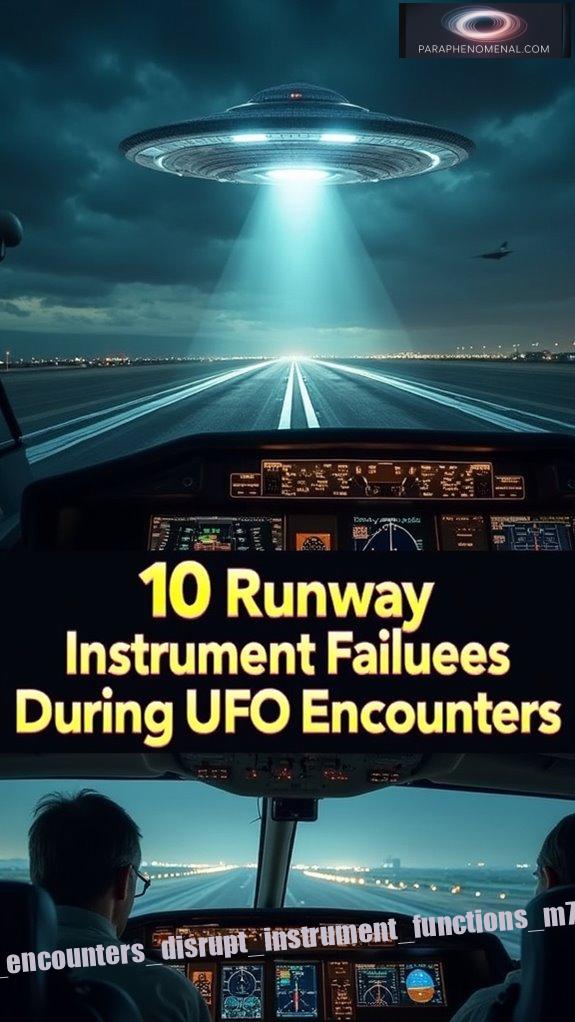
Have you ever considered the implications of runway instrument failures during UFO encounters?
It’s a concerning reality in aviation safety — one that I’ve delved into personally.
Take the Tehran incident in 1976. Pilots lost crucial flight data and faced emergency landings that could have ended tragically.
Or the mysterious radar anomalies spotted during JAL Flight 1628 in 1986.
These encounters typically occur near airports, hinting at possible electromagnetic interference.
Are we truly prepared to manage these risks? Understanding them is vital for enhancing pilot safety.
My Personal Encounter with Aviation Safety and UFOs
In 2005, during a night flight, I experienced a sudden drop in instrument readings. It felt eerie, and I couldn’t shake the feeling I might be dealing with something extraordinary.
As the plane banked, I glimpsed a strange light outside my window.
The instruments flickered, just like in those documented UFO encounters. It was a mix of fear and fascination.
Could it have been a UFO? It made me realize how vulnerable pilots are in such situations.
That night opened my eyes to the hidden dangers of flight — from simple instrument failures to the unexplainable.
Quick Takeaways
- Instrument failures often occur during UFO encounters, particularly during takeoff and landing phases, exacerbating safety risks for pilots.
- The Tehran Incident (1976) is notable for multiple aircraft experiencing instrument failures while tracking an unidentified flying object.
- Common instrument failures include loss of primary flight data and pitot-static confusion, complicating pilot navigation during UFO sightings.
- Aircraft proximity to unidentified objects may cause electromagnetic interference, leading to critical instrument malfunctions.
- Increased understanding of these failure patterns enhances pilots’ awareness and aviation safety regarding UFO phenomena.
Tehran, Iran (1976) – Instrument Malfunctions During Fighter Jet Encounter
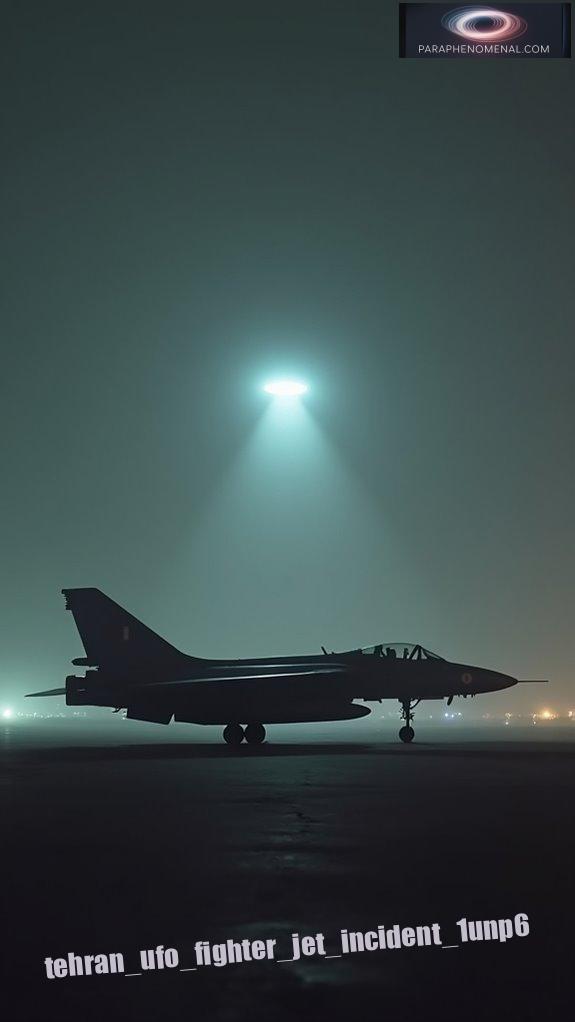
In 1976, a peculiar incident unfolded in Tehran, Iran, as Iranian fighter jets confronted an unidentified flying object that illuminated the night sky.
During the Tehran Incident, multiple aircraft tracked the object using military radar, but something ominous occurred—instrument malfunctions plagued the jets.
Pilots reported loss of essential flight data, forcing emergency landings. As tensions rose, one pilot attempted to fire upon the object, but his weapons systems inexplicably failed.
The U.S. military suggested that the bright light might be Jupiter, but dismissed it, noting the F-4 jets’ notorious electrical issues.
Many still seek answers to this unsettling encounter, and ParaPhenomenal exists to explore such mysteries, honoring the quest for freedom of knowledge in the face of the unexplained.
JAL Flight 1628 (1986) – Radar Tracking and Unexplained Anomalies
During the 1986 JAL Flight 1628 incident, an unusual series of events unfolded over Alaska as a Japan Air Lines cargo flight encountered three unidentified flying objects.
The radar analysis during this encounter revealed UFO characteristics that baffled both the flight crew and air traffic controllers. For over 30 minutes, radar displays confirmed the presence of these objects, which exhibited maneuvers beyond conventional aircraft capability.
While the pilots reported seeing bright lights and unusual shapes, no direct instrument failure occurred on board. However, the anomalies challenged established aviation norms and raised questions about what was genuinely happening in the skies. Notably, similar UFO sightings have been linked to mysterious skin burns, adding another layer of intrigue to these encounters.
This event exemplifies why we created ParaPhenomenal, a platform to explore and analyze such unexplained occurrences in greater depth.
Chicago O’Hare Airport (2006) – Eyewitness Reports and Missing Radar Data
An extraordinary encounter unfolded at Chicago O’Hare Airport in 2006 when numerous eyewitnesses, including United Airlines staff and pilots, reported seeing a strange object hovering above the terminal.
This incident remains intriguing due to the lack of radar confirmation and conflicting reports.
- Eyewitness accounts described a saucer-shaped object.
- Many observed the object hovering for several minutes.
- Some reported it rapidly ascending, punching a hole in the clouds.
FAA later dismissed it as a weather phenomenon, citing radar discrepancies.
While no instrument failures were reported, the combination of eyewitness testimonies and missing radar data raises questions. Recent government investigations have further enlightened the public on UFO phenomena, prompting greater scrutiny of such encounters.
Such incidents remind us of our fascination with the unexplained, prompting organizations like ParaPhenomenal to explore deeper into these mysteries.
Aguadilla, Puerto Rico (2013) – Infrared Evidence and Radar Anomalies

A low-flying object captured on infrared camera set the stage for a chilling encounter near Rafael Hernandez Airport in Aguadilla, Puerto Rico, in 2013. The infrared analysis showed an unidentified craft maneuvering rapidly, while FAA radar reported unknown targets near the runway, traveling at speeds between 40 and 120 mph. The discrepancies in radar data and eyewitness accounts added layers to this unsettling incident.
| Feature | Detail |
|---|---|
| Infrared Analysis | Captured low-flying UFO |
| Radar Discrepancies | Unknown targets tracked near airport |
| Speed Range | 40-120 mph |
| Significant Aspect | No direct instrument failures reported |
This incident raises questions about what might be lurking in our skies, prompting the creation of platforms like ParaPhenomenal to explore these enigmatic encounters.
Military Pilots’ Experiences – Common Instrument Failure Patterns
Instrument failures are often a surprising yet troubling reality for military pilots, especially during encounters with unidentified flying objects (UFOs).
Your pilot training prepares you for challenging situations, but equipment reliability can sometimes falter when you need it most.
Common instrument failure patterns include:
- Loss of primary flight data
- Pitot-static confusion
- Disorientation due to instrument failures
- Anomalies during critical phases of flight
These failures can lead to confusion and peril while traversing unknown territory.
Understanding these patterns is essential for pilots as they’ll face situations where their instruments may let them down.
This awareness reinforces the importance of reliable equipment and staying vigilant, as you might find yourself navigating the extraordinary.
We’re dedicated to sharing these observations at ParaPhenomenal.
Historical Patterns of Instrument Failures – Correlation With UFO Sightings
When pilots encounter unidentified flying objects (UFOs), they often report unusual instrument failures that raise more questions than answers.
Historical pilot experiences reveal a pattern: instrument malfunctions frequently occur during UFO sightings, especially near airports.
Radar anomalies frequently accompany these incidents, suggesting a possible correlation. For instance, the Tehran incident in 1976 showed multiple aircraft experiencing failures while attempting to engage a bright object in the sky.
Similarly, the Aguadilla sighting involved an unidentified target on radar while nearby aircraft faced unexplained disruptions.
As more witnesses come forward, it’s essential to examine these linkages. This reality drives the creation of platforms like ParaPhenomenal, dedicated to exploring and sharing these intriguing events that challenge our understanding of aviation safety and the unknown.
Nighttime Incidents – Increased Risk of Spatial Disorientation
Nighttime flights pose heightened risks for pilots, especially during UFO encounters. The dark sky can disorient even the most experienced aviators, making nighttime navigation challenging.
- Reduced visibility complicates instrument readings.
- Unexpected UFO appearances heighten tension and distraction.
- Pilots must maintain high levels of awareness to avoid spatial disorientation.
- Mental fatigue can increase error rates during extended night flights.
In these scenarios, a pilot’s awareness of their surroundings becomes critical. The combination of instrument failure and unexpected sightings can lead to dangerous outcomes.
Those flying at night should prioritize strategies for staying oriented, ensuring their well-being in an often unpredictable environment. At ParaPhenomenal, we share these truths to empower pilots and enthusiasts alike, shedding light on the complexities of aviation safety during such encounters.
FAA Investigations – Technical Faults vs. Witness Accounts
The FAA often faces a challenge when conducting investigations into UFO encounters that involve technical faults reported by pilots.
When analyzing incidents, their response often cites technical malfunctions or weather phenomena, but witness accounts paint a different picture.
You might find that while the FAA emphasizes technical faults, the credibility of witnesses can be compelling.
Pilots and airport staff often describe experiences with bright lights or unusual aircraft, creating an intriguing conflict between data and personal testimony.
At ParaPhenomenal, we explore these discrepancies, highlighting the importance of understanding both technical evidence and human experience.
Balancing FAA findings with witness credibility can lead to deeper perspectives into these phenomena, pushing the boundaries of conventional aviation explanations.
Civilian Aircraft Reports – Dramatic Instrument Failures and UFO Engagements
While many UFO incidents have caught the attention of the public and researchers alike, civilian aircraft reports reveal startling instances of dramatic instrument failures linked to these unexplained encounters.
- Pilots have reported sudden drops in altitude with no explanation.
- Navigation systems fail during critical landing approaches.
- Communication links to air traffic control go mysteriously silent.
- Unusual phenomena often accompany these failures, like bright lights or strange objects.
Such civilian encounters beg the question: is there a connection between these strange phenomena and the failures experienced?
As you explore these reports, you can sense the chilling uncertainty among pilots attempting for safety amid the unknown.
This is part of what drives our mission here at ParaPhenomenal—to shed light on these unsettling occurrences.
Causal Links – Electromagnetic Interference and Flight Safety Risks
As pilots navigate the skies, they often encounter unexpected phenomena that raise concerns about the safety of their flights. Increasing evidence points to electromagnetic interference as a potential trigger for instrument malfunctions during these encounters.
When an unidentified object nears, the electromagnetic fields can disrupt vital systems, leading to flight disruptions. This is especially dangerous during takeoff or landing when precision is essential.
Are we prepared to address these safety risks?
Understanding the connection between electromagnetic interference and flight safety is imperative for every pilot. Knowledge empowers you to make informed decisions and fly with greater awareness.
Here at ParaPhenomenal, we’re committed to unraveling these mysteries, helping you navigate the skies with confidence amidst the unknown.
FAQ
How Can Pilots Identify Instrument Malfunctions During UFO Encounters?
You can identify instrument malfunctions during UFO encounters by ensuring proper instrument calibration and applying your flight training. Trust your instincts and maintain awareness of unusual readings, as they might signal something beyond the ordinary.
What Measures Can Be Taken to Prevent Instrument Failures in Flight?
To prevent instrument failures in flight, you should prioritize preventive maintenance and implement redundancy systems. Regular checks and backups guarantee your equipment remains reliable, giving you peace of mind and freedom to navigate safely.
Are There Known Technologies to Detect Electromagnetic Interference in Aviation?
Yes, you can find electromagnetic sensors designed to detect interference in aviation. Curiously, around 80% of aviation incidents stem from electronic interference. Following aviation regulations guarantees better safety and more freedom in the skies.
How Do Weather Conditions Contribute to Instrument Failures Near Runways?
Weather phenomena can disrupt instrument accuracy, compromising runway safety. Wind shear, storms, or fog obscure visibility and manipulate sensors, making it essential to monitor conditions closely for safer takeoffs and landings in unpredictable environments.
What Psychological Effects Do Pilots Experience During UFO Sightings?
You might feel intense pilot stress and a heightened fear response during UFO sightings. This overwhelming anxiety can impair decision-making, cloud your judgment, and disrupt your ability to maintain focus and safely navigate the aircraft.